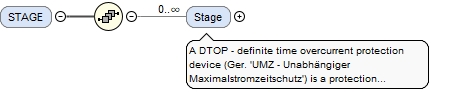
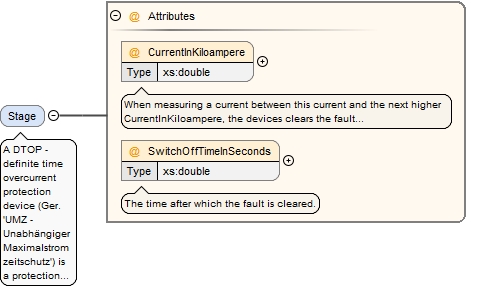
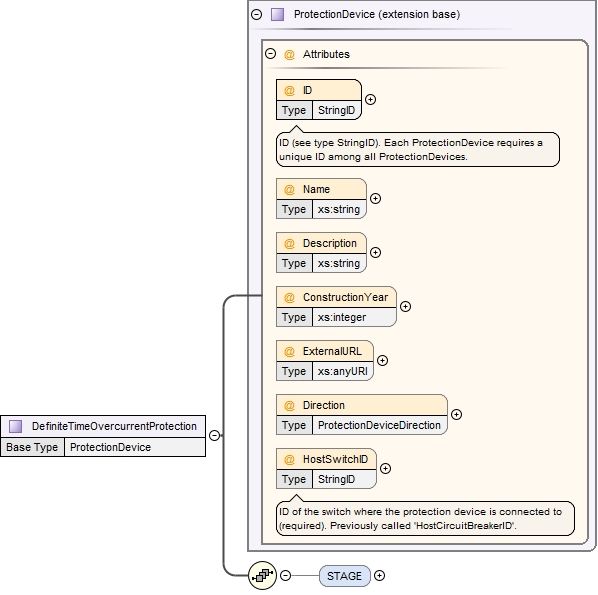
<xs:element name="STAGE" minOccurs="0" maxOccurs="1"><xs:complexType><xs:sequence><xs:element name="Stage" minOccurs="0" maxOccurs="unbounded"><xs:annotation><xs:documentation>A DTOP - definite time overcurrent protection device (Ger. 'UMZ - Unabhängiger Maximalstromzeitschutz') is a protection device, where the swich-off time depends on the short circuit current. DTOPs are configured, such that high currents are cleared faster than small currents. The reason is that high currents indicate a close proximity to the fault location. This current-time-dependency is expressed as list of time-current pair, wich discribes a step-shaped curve. Example: - 1kA / 3.0s - 2kA / 1.5s - 4kA / 0.5s The above list of current/time pairs represents this behavior: - Fault currents below 1kA are not cleared - Fault currents between 1kA and 2kA are cleared after 3s - Fault currents between 2kA and 4kA are cleared after 1.5s - Fault currents above 4kA are cleared after 0.5s</xs:documentation></xs:annotation><xs:complexType><xs:attribute name="CurrentInKiloampere" type="xs:double"><xs:annotation><xs:documentation>When measuring a current between this current and the next higher CurrentInKiloampere, the devices clears the fault after SwitchOffTimeInSeconds seconds.</xs:documentation></xs:annotation></xs:attribute><xs:attribute name="SwitchOffTimeInSeconds" type="xs:double"><xs:annotation><xs:documentation>The time after which the fault is cleared.</xs:documentation></xs:annotation></xs:attribute></xs:complexType></xs:element></xs:sequence></xs:complexType></xs:element>
A DTOP - definite time overcurrent protection device (Ger. 'UMZ - Unabhängiger Maximalstromzeitschutz')
										is a protection device, where the swich-off time depends on the short circuit current.
										DTOPs are configured, such that high currents are cleared faster than small currents.
										The reason is that high currents indicate a close proximity to the fault location.
										This current-time-dependency is expressed as list of time-current pair, wich discribes a step-shaped curve.
										Example:
										- 1kA / 3.0s
										- 2kA / 1.5s
										- 4kA / 0.5s

										The above list of current/time pairs represents this behavior:
										- Fault currents below 1kA are not cleared
										- Fault currents between 1kA and 2kA are cleared after 3s
										- Fault currents between 2kA and 4kA are cleared after 1.5s
										- Fault currents above 4kA are cleared after 0.5s
When measuring a current between this current and the next higher CurrentInKiloampere, the devices clears the fault after SwitchOffTimeInSeconds seconds.
<xs:element name="Stage" minOccurs="0" maxOccurs="unbounded"><xs:annotation><xs:documentation>A DTOP - definite time overcurrent protection device (Ger. 'UMZ - Unabhängiger Maximalstromzeitschutz') is a protection device, where the swich-off time depends on the short circuit current. DTOPs are configured, such that high currents are cleared faster than small currents. The reason is that high currents indicate a close proximity to the fault location. This current-time-dependency is expressed as list of time-current pair, wich discribes a step-shaped curve. Example: - 1kA / 3.0s - 2kA / 1.5s - 4kA / 0.5s The above list of current/time pairs represents this behavior: - Fault currents below 1kA are not cleared - Fault currents between 1kA and 2kA are cleared after 3s - Fault currents between 2kA and 4kA are cleared after 1.5s - Fault currents above 4kA are cleared after 0.5s</xs:documentation></xs:annotation><xs:complexType><xs:attribute name="CurrentInKiloampere" type="xs:double"><xs:annotation><xs:documentation>When measuring a current between this current and the next higher CurrentInKiloampere, the devices clears the fault after SwitchOffTimeInSeconds seconds.</xs:documentation></xs:annotation></xs:attribute><xs:attribute name="SwitchOffTimeInSeconds" type="xs:double"><xs:annotation><xs:documentation>The time after which the fault is cleared.</xs:documentation></xs:annotation></xs:attribute></xs:complexType></xs:element>
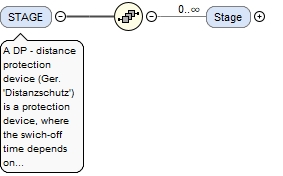
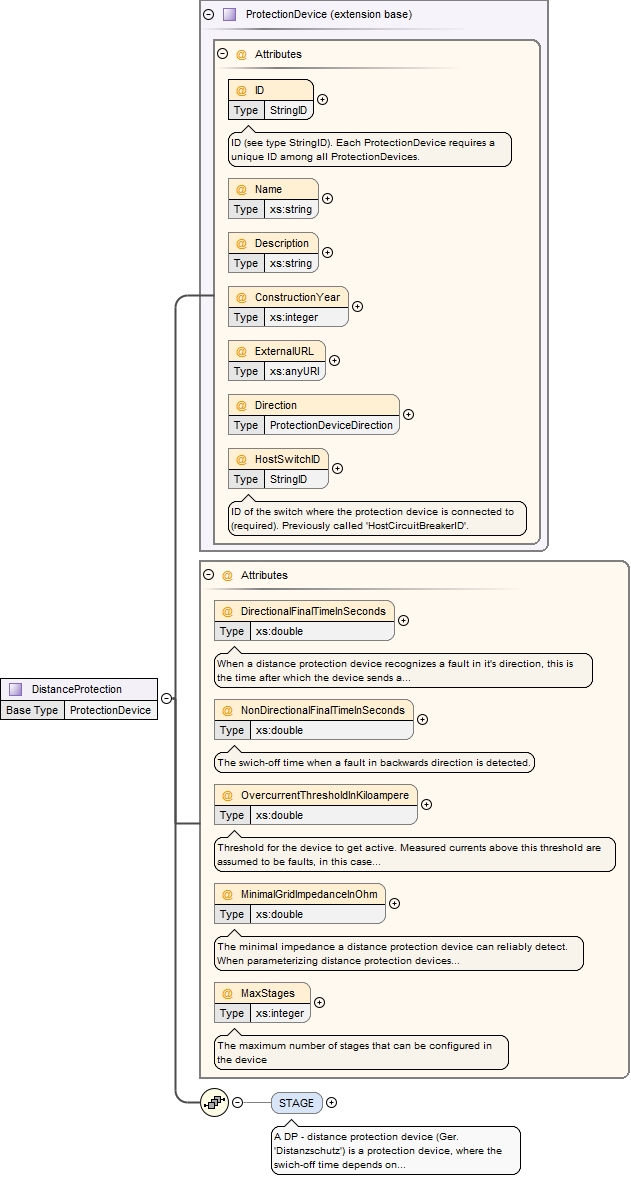
A DP - distance protection device (Ger. 'Distanzschutz') is a protection device, where the swich-off time dependson the measured electical distance (in Ohm) to the fault location.DPs are configured, such that close faults (measured impedance low) are cleared faster than distant faults (measured impedance high).This distance-time-dependency is expressed as list of distance-time pairs, wich discribes a step-shaped curve.Stages of DistanceProtection devices work analogously to the stages of DefiniteTimeOvercurrentProtection deviceswith the difference the the distance is measured in Ohm instead of Ampere. For an example how to define stages, please look at the DefiniteTimeOvercurrentProtection device.
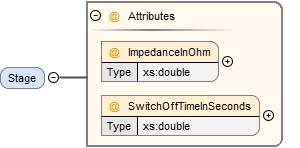
<xs:element name="STAGE" minOccurs="0" maxOccurs="1"><xs:annotation><xs:documentation>A DP - distance protection device (Ger. 'Distanzschutz') is a protection device, where the swich-off time depends on the measured electical distance (in Ohm) to the fault location. DPs are configured, such that close faults (measured impedance low) are cleared faster than distant faults (measured impedance high). This distance-time-dependency is expressed as list of distance-time pairs, wich discribes a step-shaped curve. Stages of DistanceProtection devices work analogously to the stages of DefiniteTimeOvercurrentProtection devices with the difference the the distance is measured in Ohm instead of Ampere. For an example how to define stages, please look at the DefiniteTimeOvercurrentProtection device.</xs:documentation></xs:annotation><xs:complexType><xs:sequence><xs:element name="Stage" minOccurs="0" maxOccurs="unbounded"><xs:complexType><xs:attribute name="ImpedanceInOhm" type="xs:double"/><xs:attribute name="SwitchOffTimeInSeconds" type="xs:double"/></xs:complexType></xs:element></xs:sequence></xs:complexType></xs:element>
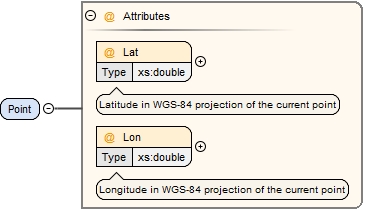
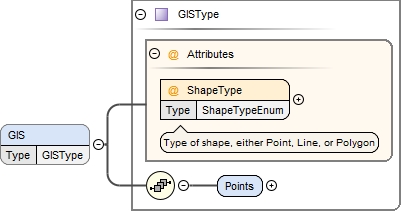
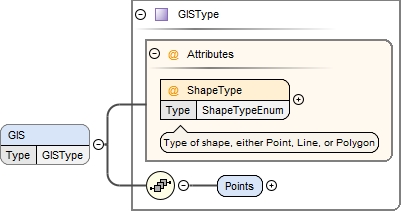
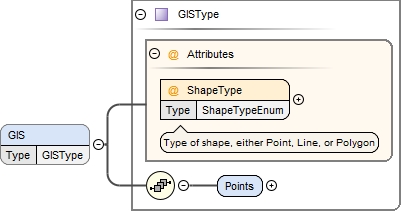
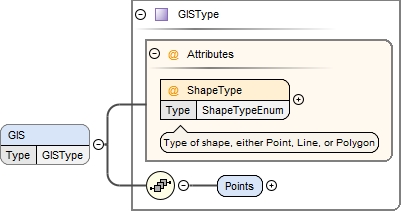
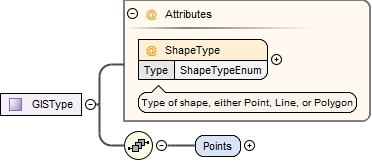
<xs:element minOccurs="1" maxOccurs="1" name="Points"><xs:complexType><xs:sequence maxOccurs="unbounded"><xs:element name="Point"><xs:complexType><xs:attribute name="Lat" type="xs:double" use="required"><xs:annotation><xs:documentation>Latitude in WGS-84 projection of the current point</xs:documentation></xs:annotation></xs:attribute><xs:attribute name="Lon" type="xs:double" use="required"><xs:annotation><xs:documentation>Longitude in WGS-84 projection of the current point</xs:documentation></xs:annotation></xs:attribute></xs:complexType></xs:element></xs:sequence></xs:complexType></xs:element>
Longitude in WGS-84 projection of thecurrent point
Source
<xs:element name="Point"><xs:complexType><xs:attribute name="Lat" type="xs:double" use="required"><xs:annotation><xs:documentation>Latitude in WGS-84 projection of the current point</xs:documentation></xs:annotation></xs:attribute><xs:attribute name="Lon" type="xs:double" use="required"><xs:annotation><xs:documentation>Longitude in WGS-84 projection of the current point</xs:documentation></xs:annotation></xs:attribute></xs:complexType></xs:element>
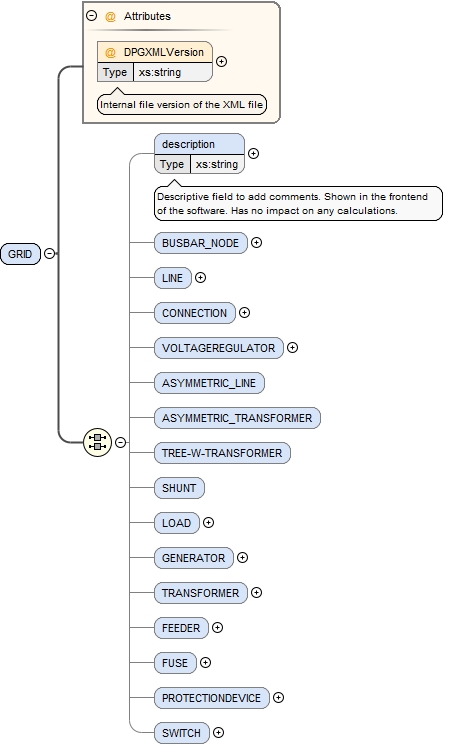
<xs:element name="GRID"><xs:complexType><xs:all><xs:element name="description" type="xs:string" minOccurs="0" maxOccurs="1"><xs:annotation><xs:documentation>Descriptive field to add comments. Shown in the frontend of the software. Has no impact on any calculations.</xs:documentation></xs:annotation></xs:element><xs:element name="BUSBAR_NODE" minOccurs="0" maxOccurs="1"><xs:complexType><xs:sequence><xs:element name="Node" minOccurs="0" maxOccurs="unbounded"><xs:complexType><xs:all><xs:element name="GIS" type="GISType" maxOccurs="1" minOccurs="0"/></xs:all><xs:attribute name="ID" type="StringID" use="required"><xs:annotation><xs:documentation>ID (see type StringID). Each Node requires a unique ID among all Nodes.</xs:documentation></xs:annotation></xs:attribute><xs:attribute name="CustomersToBusMatchingID" type="xs:string"><xs:annotation><xs:documentation>Customer-specific ID to match data (e.g., smartmeter data) to the bus</xs:documentation></xs:annotation></xs:attribute><xs:attribute name="Name" type="xs:string"/><xs:attribute name="Description" type="xs:string"/><xs:attribute name="ConstructionYear" type="xs:integer"/><xs:attribute name="ExternalURL" type="xs:anyURI"/><xs:attribute name="IsVertical" type="xs:boolean"><xs:annotation><xs:documentation>Defines if the bus (if it is drawn as a bus bar) is drawn horizontally or vertically. Buses are drawn horizontally by default, i.e., if this attribute is absent.</xs:documentation></xs:annotation></xs:attribute><xs:attribute name="Type" type="BusTypeEnum"><xs:annotation><xs:documentation>Denotes the type of the grid node and shall be either TransformerStation, DistributionCabinet, CableJunction, BusBar, ConnectionPoint, SmallConnectionPoint, or Other</xs:documentation></xs:annotation></xs:attribute><xs:attribute name="BaseVoltageInKilovolt" type="xs:double"/><xs:attribute name="SelfTimeInSeconds" type="xs:double"><xs:annotation><xs:documentation>Time required to deenergize underlying transformer station in case of fault. Optionally used in the protection calculation.</xs:documentation></xs:annotation></xs:attribute><xs:attribute name="x" type="xs:double"><xs:annotation><xs:documentation>x-coordinate of the bus to display in the schematic view</xs:documentation></xs:annotation></xs:attribute><xs:attribute name="y" type="xs:double"><xs:annotation><xs:documentation>y-coordinate of the bus to display in the schematic view</xs:documentation></xs:annotation></xs:attribute></xs:complexType></xs:element></xs:sequence></xs:complexType></xs:element><xs:element name="LINE" minOccurs="0" maxOccurs="1"><xs:complexType><xs:sequence><xs:choice><xs:element name="Line" minOccurs="0" maxOccurs="unbounded"><xs:complexType><xs:sequence><xs:element name="GIS" type="GISType" minOccurs="0" maxOccurs="1"/></xs:sequence><xs:attribute name="ID" type="StringID" use="required"><xs:annotation><xs:documentation>ID (see type StringID). Each Line requires a unique ID among all branch types (Line, Connection, Transformer).</xs:documentation></xs:annotation></xs:attribute><xs:attribute name="Name" type="xs:string"/><xs:attribute name="Description" type="xs:string"/><xs:attribute name="ConstructionYear" type="xs:integer"/><xs:attribute name="ExternalURL" type="xs:anyURI"/><xs:attribute name="ResistanceInOhmPerKilometer" type="xs:double"><xs:annotation><xs:documentation>Required for power flow simulations. It can be fetched from the Component Library if resistance and reactance values are not given in the xml.</xs:documentation></xs:annotation></xs:attribute><xs:attribute name="ReactanceInOhmPerKilometer" type="xs:double"><xs:annotation><xs:documentation>Required for power flow simulations. It can be fetched from the Component Library if resistance and reactance values are not given in the xml.</xs:documentation></xs:annotation></xs:attribute><xs:attribute name="ZeroSequenceResistanceInOhmPerKilometer" type="xs:double"><xs:annotation><xs:documentation>Optional parameter for short circuit calculations involving ground faults. If undefined, zero sequence impedance is linked to positive sequence impedance using a constant factor.</xs:documentation></xs:annotation></xs:attribute><xs:attribute name="ZeroSequenceReactanceInOhmPerKilometer" type="xs:double"><xs:annotation><xs:documentation>Optional parameter for short circuit calculations involving ground faults. If undefined, zero sequence impedance is linked to positive sequence impedance using a constant factor.</xs:documentation></xs:annotation></xs:attribute><xs:attribute name="MaximumCurrentInAmpere" type="xs:double"/><xs:attribute name="ShortCircuitStabilityThreePhaseInKiloAmpere" type="xs:double"><xs:annotation><xs:documentation>Optional parameter denoting the maximal three phase aperiodic short circuit current the line can withstand.</xs:documentation></xs:annotation></xs:attribute><xs:attribute name="ShuntCapacitanceInMicrofaradPerKilometer" type="xs:double"/><xs:attribute name="LengthInKilometer" type="xs:double"/><xs:attribute name="Manufacturer" type="xs:string"><xs:annotation><xs:documentation>Manufacturer name (it will be removed after grid import, used for component library matching only if the required electrical attributes are missing)</xs:documentation></xs:annotation></xs:attribute><xs:attribute name="LibraryComponentName" type="xs:string"><xs:annotation><xs:documentation>Name of the component, must be unique in the component library (it will be removed after grid import, used for component library matching only if the required electrical attributes are missing)</xs:documentation></xs:annotation></xs:attribute><xs:attribute name="LibraryComponentType" type="xs:string"><xs:annotation><xs:documentation>Type of the cable (e.g., GKN). It will be removed after grid import, used for component library matching only if the required electrical attributes are missing.</xs:documentation></xs:annotation></xs:attribute><xs:attribute name="IsOverhead" type="xs:boolean"><xs:annotation><xs:documentation>True if overhead line, false if underground cable or other (it will be removed after grid import, used for component library matching only if the required electrical attributes are missing)</xs:documentation></xs:annotation></xs:attribute><xs:attribute name="Material" type="xs:string"><xs:annotation><xs:documentation>Material name (it will be removed after grid import, used for component library matching only if the required electrical attributes are missing)</xs:documentation></xs:annotation></xs:attribute><xs:attribute name="CrossSection" type="xs:string"><xs:annotation><xs:documentation>Cross section of the cable (e.g. 95mm^2, 3x95/95, ...), notation needs to match the notation in the component library. It will be removed after grid import, used for component matching only if the required electrical attributes are missing.</xs:documentation></xs:annotation></xs:attribute><xs:attribute name="Bus1ID" type="StringID"><xs:annotation><xs:documentation>ID of bus 1 that it is connected to</xs:documentation></xs:annotation></xs:attribute><xs:attribute name="Bus2ID" type="StringID"><xs:annotation><xs:documentation>ID of bus 2 that it is connected to</xs:documentation></xs:annotation></xs:attribute><xs:attribute name="ConnectedAtBus1" type="xs:boolean"><xs:annotation><xs:documentation>True if switch is closed (connected) at bus 1, false if open (not connected). Default value is true</xs:documentation></xs:annotation></xs:attribute><xs:attribute name="ConnectedAtBus2" type="xs:boolean"><xs:annotation><xs:documentation>True if switch is closed (connected) at bus 2, false if open (not connected). Default value is true</xs:documentation></xs:annotation></xs:attribute></xs:complexType></xs:element></xs:choice></xs:sequence></xs:complexType></xs:element><xs:element name="CONNECTION" minOccurs="0" maxOccurs="1"><xs:complexType><xs:sequence><xs:choice><xs:element name="Connection" minOccurs="0" maxOccurs="unbounded"><xs:complexType><xs:sequence><xs:element name="GIS" type="GISType" minOccurs="0" maxOccurs="1"/></xs:sequence><xs:attribute name="ID" type="StringID" use="required"><xs:annotation><xs:documentation>ID (see type StringID). Each Line requires a unique ID among all branch types (Line, Connection, Transformer).</xs:documentation></xs:annotation></xs:attribute><xs:attribute name="Name" type="xs:string"/><xs:attribute name="Description" type="xs:string"/><xs:attribute name="ConstructionYear" type="xs:integer"/><xs:attribute name="ExternalURL" type="xs:anyURI"/><xs:attribute name="ResistanceInMilliOhm" type="xs:double"><xs:annotation><xs:documentation>Resistance in mΩ. Optional parameter. If neither ResistanceInMilliOhm nor ReactanceInMilliOhm are provided, the connection has a minimal resistance of 1mΩ (for numerical reasons).</xs:documentation></xs:annotation></xs:attribute><xs:attribute name="ReactanceInMilliOhm" type="xs:double"><xs:annotation><xs:documentation>Reactance in mΩ. Optional parameter. If neither ResistanceInMilliOhm nor ReactanceInMilliOhm are provided, the connection has a minimal resistance of 1mΩ (for numerical reasons).</xs:documentation></xs:annotation></xs:attribute><xs:attribute name="Bus1ID" type="StringID"><xs:annotation><xs:documentation>ID of bus 1 that it is connected to</xs:documentation></xs:annotation></xs:attribute><xs:attribute name="Bus2ID" type="StringID"><xs:annotation><xs:documentation>ID of bus 2 that it is connected to</xs:documentation></xs:annotation></xs:attribute><xs:attribute name="ConnectedAtBus1" type="xs:boolean"><xs:annotation><xs:documentation>True if switch is closed (connected) at bus 1, false if open (not connected). Default value is true</xs:documentation></xs:annotation></xs:attribute><xs:attribute name="ConnectedAtBus2" type="xs:boolean"><xs:annotation><xs:documentation>True if switch is closed (connected) at bus 2, false if open (not connected). Default value is true</xs:documentation></xs:annotation></xs:attribute></xs:complexType></xs:element></xs:choice></xs:sequence></xs:complexType></xs:element><xs:element name="VOLTAGEREGULATOR" minOccurs="0" maxOccurs="1"><xs:complexType><xs:sequence><xs:choice><xs:element name="VoltageRegulator" minOccurs="0" maxOccurs="unbounded"><xs:complexType><xs:attribute name="ID" type="StringID" use="required"><xs:annotation><xs:documentation>ID (see type StringID). Each VoltageRegulator requires a unique ID among all VoltageRegulators.</xs:documentation></xs:annotation></xs:attribute><xs:attribute name="Name" type="xs:string"/><xs:attribute name="Description" type="xs:string"/><xs:attribute name="ConstructionYear" type="xs:integer"/><xs:attribute name="ExternalURL" type="xs:anyURI"/><xs:attribute name="HostLineID" type="StringID"/><xs:attribute name="NumTaps" type="xs:integer"/><xs:attribute name="TapSizeFractionInPercent" type="xs:double"/><xs:attribute name="DeadBandFractionInPercent" type="xs:double"/><xs:attribute name="SetpointInPerUnit" type="xs:double"><xs:annotation><xs:documentation>This defines the desired voltage in per unit at the measured bus.</xs:documentation></xs:annotation></xs:attribute></xs:complexType></xs:element></xs:choice></xs:sequence></xs:complexType></xs:element><xs:element name="ASYMMETRIC_LINE" minOccurs="0" maxOccurs="1"/><xs:element name="ASYMMETRIC_TRANSFORMER" minOccurs="0" maxOccurs="1"/><xs:element name="TREE-W-TRANSFORMER" minOccurs="0" maxOccurs="1"/><xs:element name="SHUNT" minOccurs="0" maxOccurs="1"/><xs:element name="LOAD" minOccurs="0" maxOccurs="1"><xs:complexType><xs:sequence><xs:element name="Load" minOccurs="0" maxOccurs="unbounded"><xs:complexType><xs:sequence><xs:element name="ReactiveLoadCharacteristic" type="ReactivePowerCharacteristic" minOccurs="0"/></xs:sequence><xs:attribute name="ID" type="StringID" use="required"><xs:annotation><xs:documentation>ID (see type StringID). Each Load requires a unique ID among all Loads.</xs:documentation></xs:annotation></xs:attribute><xs:attribute name="Name" type="xs:string"/><xs:attribute name="Description" type="xs:string"/><xs:attribute name="ConstructionYear" type="xs:integer"/><xs:attribute name="ExternalURL" type="xs:anyURI"/><xs:attribute name="LoadCategory" type="LoadCategoryEnum"/><xs:attribute name="ActiveLoadInMegawatt" type="xs:double"/><xs:attribute name="Bus1ID" type="StringID"><xs:annotation><xs:documentation>ID of bus 1 that it is connected to</xs:documentation></xs:annotation></xs:attribute><xs:attribute name="Connected" type="xs:boolean"><xs:annotation><xs:documentation>True if switch is closed (connected) at bus 1, false if open (not connected)</xs:documentation></xs:annotation></xs:attribute><xs:attribute name="ConnectionRequestID" type="xs:string"><xs:annotation><xs:documentation>Optional parameter. If set to the ID of a connection request, the corresponding request is automatically closed when the grid is imported via grid data integration.</xs:documentation></xs:annotation></xs:attribute></xs:complexType></xs:element></xs:sequence></xs:complexType></xs:element><xs:element name="GENERATOR" minOccurs="0" maxOccurs="1"><xs:complexType><xs:sequence><xs:element name="Generator" minOccurs="0" maxOccurs="unbounded"><xs:complexType><xs:sequence><xs:element name="ReactiveGenerationCharacteristic" type="ReactivePowerCharacteristic" minOccurs="0"/></xs:sequence><xs:attribute name="ID" type="StringID" use="required"><xs:annotation><xs:documentation>ID (see type StringID). Each Generator requires a unique ID among all Generators.</xs:documentation></xs:annotation></xs:attribute><xs:attribute name="Name" type="xs:string"/><xs:attribute name="Description" type="xs:string"/><xs:attribute name="ConstructionYear" type="xs:integer"/><xs:attribute name="ExternalURL" type="xs:anyURI"/><xs:attribute name="GenerationCategory" type="GenerationCategoryEnum"/><xs:attribute name="ConnectionType" type="GenerationConnectionEnum"/><xs:attribute name="ActiveGenerationInMegawatt" type="xs:double"/><xs:attribute name="MinReactiveGenerationInMegavar" type="xs:double"/><xs:attribute name="MaxReactiveGenerationInMegavar" type="xs:double"/><xs:attribute name="MinActiveGenerationInMegawatt" type="xs:double"/><xs:attribute name="MaxActiveGenerationInMegawatt" type="xs:double"/><xs:attribute name="VoltageSetpointInKilovolt" type="xs:double"/><xs:attribute name="Bus1ID" type="StringID"><xs:annotation><xs:documentation>ID of bus 1 that it is connected to</xs:documentation></xs:annotation></xs:attribute><xs:attribute name="Connected" type="xs:boolean"><xs:annotation><xs:documentation>True if switch is closed (connected) at bus 1, false if open (not connected)</xs:documentation></xs:annotation></xs:attribute><xs:attribute name="ConnectionRequestID" type="xs:string"><xs:annotation><xs:documentation>Optional parameter. If set to the ID of a connection request, the corresponding request is automatically closed when the grid is imported via grid data integration.</xs:documentation></xs:annotation></xs:attribute></xs:complexType></xs:element></xs:sequence></xs:complexType></xs:element><xs:element name="TRANSFORMER" minOccurs="0" maxOccurs="1"><xs:complexType><xs:sequence><xs:choice><xs:element name="Transformer" minOccurs="0" maxOccurs="unbounded"><xs:complexType><xs:sequence><xs:element name="GIS" type="GISType" minOccurs="0" maxOccurs="1"/></xs:sequence><xs:attribute name="ID" type="StringID" use="required"><xs:annotation><xs:documentation>ID (see type StringID). Each Transformer requires a unique ID among all branch types (Line, Connection, Transformer).</xs:documentation></xs:annotation></xs:attribute><xs:attribute name="MeasuredVoltageBusID" type="StringID"><xs:annotation><xs:documentation>The bus ID at which the voltage is measured for the tap-changing controller (see type StringID)</xs:documentation></xs:annotation></xs:attribute><xs:attribute name="Name" type="xs:string"/><xs:attribute name="Description" type="xs:string"/><xs:attribute name="ConstructionYear" type="xs:integer"/><xs:attribute name="ExternalURL" type="xs:anyURI"/><xs:attribute name="VectorGroup" type="xs:string"><xs:annotation><xs:documentation>Vector group (Schaltgruppe) of transformer, e.g. Dyn5</xs:documentation></xs:annotation></xs:attribute><xs:attribute name="StarPointGrounding" type="StarPointGrounding"><xs:annotation><xs:documentation>Defines how the star point is grounded. If vectorGroup doesn't have a star point, leave empty.</xs:documentation></xs:annotation></xs:attribute><xs:attribute name="SecondaryGroundingInductanceInHenry" type="xs:double"><xs:annotation><xs:documentation>In case the star point grounding type 'Resonant grounding' was selected, this number defines the grounding inductance in Henry.</xs:documentation></xs:annotation></xs:attribute><xs:attribute name="TransformerRatingInMegavoltampere" type="xs:double"><xs:annotation><xs:documentation>Required for power flow simulations. It can be fetched from the Component Library if short circuit voltage and copper losses values are not given in the xml.</xs:documentation></xs:annotation></xs:attribute><xs:attribute name="MaximumApparentPowerInMegavoltampere" type="xs:double"/><xs:attribute name="ShortCircuitVoltageInPercent" type="xs:double"><xs:annotation><xs:documentation>Required for power flow simulations. It can be fetched from the Component Library if short circuit voltage and copper losses values are not given in the xml.</xs:documentation></xs:annotation></xs:attribute><xs:attribute name="CopperLossesInPercent" type="xs:double"><xs:annotation><xs:documentation>Required for power flow simulations. It can be fetched from the Component Library if short circuit voltage and copper losses values are not given in the xml.</xs:documentation></xs:annotation></xs:attribute><xs:attribute name="RatedVoltageAtBus1" type="xs:double"><xs:annotation><xs:documentation>Rated transformer voltage on the side of Bus 1 in Kilovolt</xs:documentation></xs:annotation></xs:attribute><xs:attribute name="RatedVoltageAtBus2" type="xs:double"><xs:annotation><xs:documentation>Rated transformer voltage on the side of Bus 2 in Kilovolt</xs:documentation></xs:annotation></xs:attribute><xs:attribute name="IsTapChanging" type="xs:boolean"><xs:annotation><xs:documentation>True if transformer is a tap-changing transformer</xs:documentation></xs:annotation></xs:attribute><xs:attribute name="NumTaps" type="xs:int"><xs:annotation><xs:documentation>For tap-changing transformers, it defines the number of taps</xs:documentation></xs:annotation></xs:attribute><xs:attribute name="TapSizeInPercent" type="xs:double"><xs:annotation><xs:documentation>For tap-changing transformers, it defines the tap size in percent (%)</xs:documentation></xs:annotation></xs:attribute><xs:attribute name="DeadBandInPercent" type="xs:double"><xs:annotation><xs:documentation>For tap-changing transformers, it defines the dead band in percent (%)</xs:documentation></xs:annotation></xs:attribute><xs:attribute name="SetpointInPerUnit" type="xs:double"><xs:annotation><xs:documentation>For tap-changing transformers, it defines the desired voltage in per unit at the measured bus.</xs:documentation></xs:annotation></xs:attribute><xs:attribute name="Model" type="xs:string"><xs:annotation><xs:documentation>Text field (it will be removed after grid import, used for component library matching only if the required electrical attributes are missing)</xs:documentation></xs:annotation></xs:attribute><xs:attribute name="Manufacturer" type="xs:string"><xs:annotation><xs:documentation>Manufacturer name (it will be removed after grid import, used for component library matching only if the required electrical attributes are missing)</xs:documentation></xs:annotation></xs:attribute><xs:attribute name="LibraryComponentName" type="xs:string"><xs:annotation><xs:documentation>Name of the component, must be unique in the component library (it will be removed after grid import, used for component library matching only if the required electrical attributes are missing)</xs:documentation></xs:annotation></xs:attribute><xs:attribute name="LibraryComponentType" type="xs:string"><xs:annotation><xs:documentation>Type of the transformer as described in the library (it will be removed after grid import, used for component library matching only if the required electrical attributes are missing)</xs:documentation></xs:annotation></xs:attribute><xs:attribute name="Bus1ID" type="StringID"><xs:annotation><xs:documentation>ID of bus 1 that it is connected to</xs:documentation></xs:annotation></xs:attribute><xs:attribute name="Bus2ID" type="StringID"><xs:annotation><xs:documentation>ID of bus 2 that it is connected to</xs:documentation></xs:annotation></xs:attribute><xs:attribute name="ConnectedAtBus1" type="xs:boolean"><xs:annotation><xs:documentation>True if switch is closed (connected) at bus 1, false if open (not connected). Default value is true</xs:documentation></xs:annotation></xs:attribute><xs:attribute name="ConnectedAtBus2" type="xs:boolean"><xs:annotation><xs:documentation>True if switch is closed (connected) at bus 2, false if open (not connected). Default value is true</xs:documentation></xs:annotation></xs:attribute></xs:complexType></xs:element></xs:choice></xs:sequence></xs:complexType></xs:element><xs:element name="FEEDER" minOccurs="0" maxOccurs="1"><xs:complexType><xs:sequence><xs:element name="Feeder" minOccurs="0" maxOccurs="unbounded"><xs:complexType><xs:attribute name="ID" type="StringID" use="required"><xs:annotation><xs:documentation>ID (see type StringID).</xs:documentation></xs:annotation></xs:attribute><xs:attribute name="Name" type="xs:string"/><xs:attribute name="HostBusID" type="StringID"/><xs:attribute name="Description" type="xs:string"/><xs:attribute name="ConstructionYear" type="xs:integer"/><xs:attribute name="ExternalURL" type="xs:anyURI"/><xs:attribute name="OperationalVoltageInPerUnit" type="xs:double"/><xs:attribute name="OperationalAngleInRadians" type="xs:double"/><xs:attribute name="VoltageFactorMax" type="xs:double"/><xs:attribute name="VoltageFactorMin" type="xs:double"/><xs:attribute name="MaxSourceShortCircuitPowerInMegavoltampere" type="xs:double"/><xs:attribute name="MinSourceShortCircuitPowerInMegavoltampere" type="xs:double"/><xs:attribute name="ReactanceToResistanceRatio" type="xs:double"/><xs:attribute name="Connected" type="xs:boolean"><xs:annotation><xs:documentation>True if switch is closed (connected) at the host bus, false if open (not connected)</xs:documentation></xs:annotation></xs:attribute></xs:complexType></xs:element></xs:sequence></xs:complexType></xs:element><xs:element name="FUSE" minOccurs="0" maxOccurs="1"><xs:complexType><xs:sequence><xs:element name="Fuse" minOccurs="0" maxOccurs="unbounded"><xs:complexType><xs:attribute name="ID" type="StringID" use="required"><xs:annotation><xs:documentation>ID (see type StringID). Each Fuse requires a unique ID among all Fuses.</xs:documentation></xs:annotation></xs:attribute><xs:attribute name="Name" type="xs:string"/><xs:attribute name="Description" type="xs:string"/><xs:attribute name="ConstructionYear" type="xs:integer"/><xs:attribute name="ExternalURL" type="xs:anyURI"/><xs:attribute name="HostBranchID" type="StringID"><xs:annotation><xs:documentation>ID of the branch that the fuse is connected to (required)</xs:documentation></xs:annotation></xs:attribute><xs:attribute name="BranchEnd" type="BranchEndEnum"><xs:annotation><xs:documentation>The branch end that the fuse is connected to</xs:documentation></xs:annotation></xs:attribute><xs:attribute name="FuseType" type="FuseTypeEnum"/><xs:attribute name="LibraryFuseName" type="xs:string"/></xs:complexType></xs:element></xs:sequence></xs:complexType></xs:element><xs:element name="PROTECTIONDEVICE" minOccurs="0" maxOccurs="1"><xs:complexType><xs:sequence><xs:element name="ProtectionDevice" minOccurs="0" maxOccurs="unbounded" type="ProtectionDevice"/></xs:sequence></xs:complexType></xs:element><xs:element name="SWITCH" minOccurs="0" maxOccurs="1"><xs:complexType><xs:sequence><xs:element name="Switch" minOccurs="0" maxOccurs="unbounded"><xs:complexType><xs:attribute name="ID" type="StringID" use="required"><xs:annotation><xs:documentation>ID (see type StringID). Each Switch requires a unique ID among all Switches.</xs:documentation></xs:annotation></xs:attribute><xs:attribute name="Name" type="xs:string"/><xs:attribute name="Description" type="xs:string"/><xs:attribute name="Type" type="SwitchTypeEnum"/><xs:attribute name="BranchEnd" type="BranchEndEnum"/><xs:attribute name="HostBranchID" type="xs:string"/><xs:attribute name="MaxAperiodicShortCircuitCurrentInKiloampere" type="xs:double"/><xs:attribute name="ConstructionYear" type="xs:integer"/><xs:attribute name="ExternalURL" type="xs:anyURI"/></xs:complexType></xs:element></xs:sequence></xs:complexType></xs:element></xs:all><xs:attribute name="DPGXMLVersion" type="xs:string"><xs:annotation><xs:documentation>Internal file version of the XML file</xs:documentation></xs:annotation></xs:attribute></xs:complexType></xs:element>
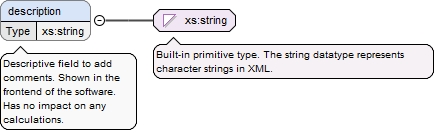
Descriptive field to add comments. Shown in the frontend of the software. Has no impact on any calculations.
Diagram
Type
xs:string
Properties
content
simple
minOccurs
0
maxOccurs
1
Source
<xs:element name="description" type="xs:string" minOccurs="0" maxOccurs="1"><xs:annotation><xs:documentation>Descriptive field to add comments. Shown in the frontend of the software. Has no impact on any calculations.</xs:documentation></xs:annotation></xs:element>
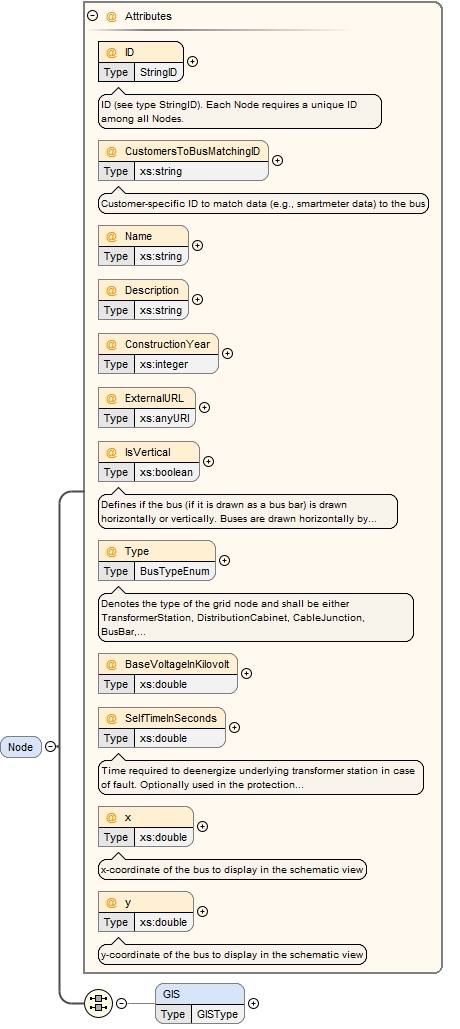
<xs:element name="BUSBAR_NODE" minOccurs="0" maxOccurs="1"><xs:complexType><xs:sequence><xs:element name="Node" minOccurs="0" maxOccurs="unbounded"><xs:complexType><xs:all><xs:element name="GIS" type="GISType" maxOccurs="1" minOccurs="0"/></xs:all><xs:attribute name="ID" type="StringID" use="required"><xs:annotation><xs:documentation>ID (see type StringID). Each Node requires a unique ID among all Nodes.</xs:documentation></xs:annotation></xs:attribute><xs:attribute name="CustomersToBusMatchingID" type="xs:string"><xs:annotation><xs:documentation>Customer-specific ID to match data (e.g., smartmeter data) to the bus</xs:documentation></xs:annotation></xs:attribute><xs:attribute name="Name" type="xs:string"/><xs:attribute name="Description" type="xs:string"/><xs:attribute name="ConstructionYear" type="xs:integer"/><xs:attribute name="ExternalURL" type="xs:anyURI"/><xs:attribute name="IsVertical" type="xs:boolean"><xs:annotation><xs:documentation>Defines if the bus (if it is drawn as a bus bar) is drawn horizontally or vertically. Buses are drawn horizontally by default, i.e., if this attribute is absent.</xs:documentation></xs:annotation></xs:attribute><xs:attribute name="Type" type="BusTypeEnum"><xs:annotation><xs:documentation>Denotes the type of the grid node and shall be either TransformerStation, DistributionCabinet, CableJunction, BusBar, ConnectionPoint, SmallConnectionPoint, or Other</xs:documentation></xs:annotation></xs:attribute><xs:attribute name="BaseVoltageInKilovolt" type="xs:double"/><xs:attribute name="SelfTimeInSeconds" type="xs:double"><xs:annotation><xs:documentation>Time required to deenergize underlying transformer station in case of fault. Optionally used in the protection calculation.</xs:documentation></xs:annotation></xs:attribute><xs:attribute name="x" type="xs:double"><xs:annotation><xs:documentation>x-coordinate of the bus to display in the schematic view</xs:documentation></xs:annotation></xs:attribute><xs:attribute name="y" type="xs:double"><xs:annotation><xs:documentation>y-coordinate of the bus to display in the schematic view</xs:documentation></xs:annotation></xs:attribute></xs:complexType></xs:element></xs:sequence></xs:complexType></xs:element>
Defines if the bus (if it is drawn as a bus bar) is drawn horizontally or vertically. Buses are drawn horizontally by default, i.e., if this attribute is absent.
Denotes the type of the grid node and shall be either TransformerStation, DistributionCabinet, CableJunction, BusBar, ConnectionPoint, SmallConnectionPoint, or Other
y-coordinate of the bus to display in the schematic view
Source
<xs:element name="Node" minOccurs="0" maxOccurs="unbounded"><xs:complexType><xs:all><xs:element name="GIS" type="GISType" maxOccurs="1" minOccurs="0"/></xs:all><xs:attribute name="ID" type="StringID" use="required"><xs:annotation><xs:documentation>ID (see type StringID). Each Node requires a unique ID among all Nodes.</xs:documentation></xs:annotation></xs:attribute><xs:attribute name="CustomersToBusMatchingID" type="xs:string"><xs:annotation><xs:documentation>Customer-specific ID to match data (e.g., smartmeter data) to the bus</xs:documentation></xs:annotation></xs:attribute><xs:attribute name="Name" type="xs:string"/><xs:attribute name="Description" type="xs:string"/><xs:attribute name="ConstructionYear" type="xs:integer"/><xs:attribute name="ExternalURL" type="xs:anyURI"/><xs:attribute name="IsVertical" type="xs:boolean"><xs:annotation><xs:documentation>Defines if the bus (if it is drawn as a bus bar) is drawn horizontally or vertically. Buses are drawn horizontally by default, i.e., if this attribute is absent.</xs:documentation></xs:annotation></xs:attribute><xs:attribute name="Type" type="BusTypeEnum"><xs:annotation><xs:documentation>Denotes the type of the grid node and shall be either TransformerStation, DistributionCabinet, CableJunction, BusBar, ConnectionPoint, SmallConnectionPoint, or Other</xs:documentation></xs:annotation></xs:attribute><xs:attribute name="BaseVoltageInKilovolt" type="xs:double"/><xs:attribute name="SelfTimeInSeconds" type="xs:double"><xs:annotation><xs:documentation>Time required to deenergize underlying transformer station in case of fault. Optionally used in the protection calculation.</xs:documentation></xs:annotation></xs:attribute><xs:attribute name="x" type="xs:double"><xs:annotation><xs:documentation>x-coordinate of the bus to display in the schematic view</xs:documentation></xs:annotation></xs:attribute><xs:attribute name="y" type="xs:double"><xs:annotation><xs:documentation>y-coordinate of the bus to display in the schematic view</xs:documentation></xs:annotation></xs:attribute></xs:complexType></xs:element>
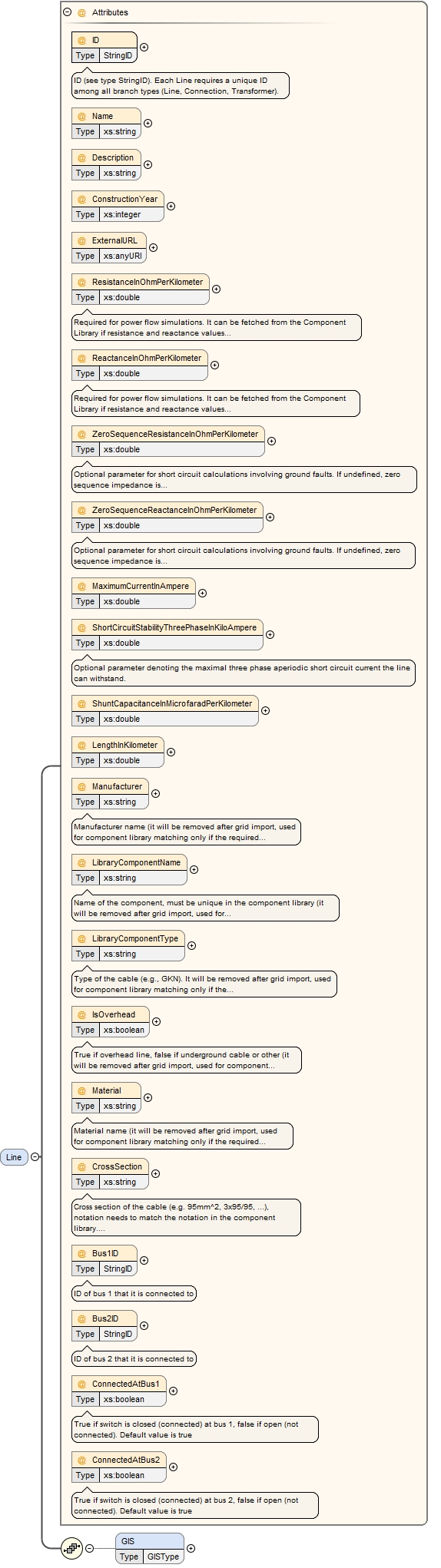
<xs:element name="LINE" minOccurs="0" maxOccurs="1"><xs:complexType><xs:sequence><xs:choice><xs:element name="Line" minOccurs="0" maxOccurs="unbounded"><xs:complexType><xs:sequence><xs:element name="GIS" type="GISType" minOccurs="0" maxOccurs="1"/></xs:sequence><xs:attribute name="ID" type="StringID" use="required"><xs:annotation><xs:documentation>ID (see type StringID). Each Line requires a unique ID among all branch types (Line, Connection, Transformer).</xs:documentation></xs:annotation></xs:attribute><xs:attribute name="Name" type="xs:string"/><xs:attribute name="Description" type="xs:string"/><xs:attribute name="ConstructionYear" type="xs:integer"/><xs:attribute name="ExternalURL" type="xs:anyURI"/><xs:attribute name="ResistanceInOhmPerKilometer" type="xs:double"><xs:annotation><xs:documentation>Required for power flow simulations. It can be fetched from the Component Library if resistance and reactance values are not given in the xml.</xs:documentation></xs:annotation></xs:attribute><xs:attribute name="ReactanceInOhmPerKilometer" type="xs:double"><xs:annotation><xs:documentation>Required for power flow simulations. It can be fetched from the Component Library if resistance and reactance values are not given in the xml.</xs:documentation></xs:annotation></xs:attribute><xs:attribute name="ZeroSequenceResistanceInOhmPerKilometer" type="xs:double"><xs:annotation><xs:documentation>Optional parameter for short circuit calculations involving ground faults. If undefined, zero sequence impedance is linked to positive sequence impedance using a constant factor.</xs:documentation></xs:annotation></xs:attribute><xs:attribute name="ZeroSequenceReactanceInOhmPerKilometer" type="xs:double"><xs:annotation><xs:documentation>Optional parameter for short circuit calculations involving ground faults. If undefined, zero sequence impedance is linked to positive sequence impedance using a constant factor.</xs:documentation></xs:annotation></xs:attribute><xs:attribute name="MaximumCurrentInAmpere" type="xs:double"/><xs:attribute name="ShortCircuitStabilityThreePhaseInKiloAmpere" type="xs:double"><xs:annotation><xs:documentation>Optional parameter denoting the maximal three phase aperiodic short circuit current the line can withstand.</xs:documentation></xs:annotation></xs:attribute><xs:attribute name="ShuntCapacitanceInMicrofaradPerKilometer" type="xs:double"/><xs:attribute name="LengthInKilometer" type="xs:double"/><xs:attribute name="Manufacturer" type="xs:string"><xs:annotation><xs:documentation>Manufacturer name (it will be removed after grid import, used for component library matching only if the required electrical attributes are missing)</xs:documentation></xs:annotation></xs:attribute><xs:attribute name="LibraryComponentName" type="xs:string"><xs:annotation><xs:documentation>Name of the component, must be unique in the component library (it will be removed after grid import, used for component library matching only if the required electrical attributes are missing)</xs:documentation></xs:annotation></xs:attribute><xs:attribute name="LibraryComponentType" type="xs:string"><xs:annotation><xs:documentation>Type of the cable (e.g., GKN). It will be removed after grid import, used for component library matching only if the required electrical attributes are missing.</xs:documentation></xs:annotation></xs:attribute><xs:attribute name="IsOverhead" type="xs:boolean"><xs:annotation><xs:documentation>True if overhead line, false if underground cable or other (it will be removed after grid import, used for component library matching only if the required electrical attributes are missing)</xs:documentation></xs:annotation></xs:attribute><xs:attribute name="Material" type="xs:string"><xs:annotation><xs:documentation>Material name (it will be removed after grid import, used for component library matching only if the required electrical attributes are missing)</xs:documentation></xs:annotation></xs:attribute><xs:attribute name="CrossSection" type="xs:string"><xs:annotation><xs:documentation>Cross section of the cable (e.g. 95mm^2, 3x95/95, ...), notation needs to match the notation in the component library. It will be removed after grid import, used for component matching only if the required electrical attributes are missing.</xs:documentation></xs:annotation></xs:attribute><xs:attribute name="Bus1ID" type="StringID"><xs:annotation><xs:documentation>ID of bus 1 that it is connected to</xs:documentation></xs:annotation></xs:attribute><xs:attribute name="Bus2ID" type="StringID"><xs:annotation><xs:documentation>ID of bus 2 that it is connected to</xs:documentation></xs:annotation></xs:attribute><xs:attribute name="ConnectedAtBus1" type="xs:boolean"><xs:annotation><xs:documentation>True if switch is closed (connected) at bus 1, false if open (not connected). Default value is true</xs:documentation></xs:annotation></xs:attribute><xs:attribute name="ConnectedAtBus2" type="xs:boolean"><xs:annotation><xs:documentation>True if switch is closed (connected) at bus 2, false if open (not connected). Default value is true</xs:documentation></xs:annotation></xs:attribute></xs:complexType></xs:element></xs:choice></xs:sequence></xs:complexType></xs:element>
Cross section of the cable (e.g. 95mm^2, 3x95/95, ...), notation needs to match the notation in the component library.It will be removed after grid import, used for component matching only if the required electrical attributes are missing.
True if overhead line, false if underground cable or other (it will be removed after
grid import, used for component library matching only if the required electrical attributes are missing)
Name of the component, must be unique in the component library (it will be removed after gridimport, used for component library matching only if the required electrical attributes are missing)
Type of the cable (e.g., GKN). It will be removed after grid import, used for component library matching only if the required electrical attributes are missing.
Optional parameter for short circuit calculations involvingground faults. If undefined, zero sequence impedance is linked to positivesequence impedance using a constant factor.
Optional parameter for short circuit calculations involvingground faults. If undefined, zero sequence impedance is linked to positivesequence impedance using a constant factor.
Source
<xs:element name="Line" minOccurs="0" maxOccurs="unbounded"><xs:complexType><xs:sequence><xs:element name="GIS" type="GISType" minOccurs="0" maxOccurs="1"/></xs:sequence><xs:attribute name="ID" type="StringID" use="required"><xs:annotation><xs:documentation>ID (see type StringID). Each Line requires a unique ID among all branch types (Line, Connection, Transformer).</xs:documentation></xs:annotation></xs:attribute><xs:attribute name="Name" type="xs:string"/><xs:attribute name="Description" type="xs:string"/><xs:attribute name="ConstructionYear" type="xs:integer"/><xs:attribute name="ExternalURL" type="xs:anyURI"/><xs:attribute name="ResistanceInOhmPerKilometer" type="xs:double"><xs:annotation><xs:documentation>Required for power flow simulations. It can be fetched from the Component Library if resistance and reactance values are not given in the xml.</xs:documentation></xs:annotation></xs:attribute><xs:attribute name="ReactanceInOhmPerKilometer" type="xs:double"><xs:annotation><xs:documentation>Required for power flow simulations. It can be fetched from the Component Library if resistance and reactance values are not given in the xml.</xs:documentation></xs:annotation></xs:attribute><xs:attribute name="ZeroSequenceResistanceInOhmPerKilometer" type="xs:double"><xs:annotation><xs:documentation>Optional parameter for short circuit calculations involving ground faults. If undefined, zero sequence impedance is linked to positive sequence impedance using a constant factor.</xs:documentation></xs:annotation></xs:attribute><xs:attribute name="ZeroSequenceReactanceInOhmPerKilometer" type="xs:double"><xs:annotation><xs:documentation>Optional parameter for short circuit calculations involving ground faults. If undefined, zero sequence impedance is linked to positive sequence impedance using a constant factor.</xs:documentation></xs:annotation></xs:attribute><xs:attribute name="MaximumCurrentInAmpere" type="xs:double"/><xs:attribute name="ShortCircuitStabilityThreePhaseInKiloAmpere" type="xs:double"><xs:annotation><xs:documentation>Optional parameter denoting the maximal three phase aperiodic short circuit current the line can withstand.</xs:documentation></xs:annotation></xs:attribute><xs:attribute name="ShuntCapacitanceInMicrofaradPerKilometer" type="xs:double"/><xs:attribute name="LengthInKilometer" type="xs:double"/><xs:attribute name="Manufacturer" type="xs:string"><xs:annotation><xs:documentation>Manufacturer name (it will be removed after grid import, used for component library matching only if the required electrical attributes are missing)</xs:documentation></xs:annotation></xs:attribute><xs:attribute name="LibraryComponentName" type="xs:string"><xs:annotation><xs:documentation>Name of the component, must be unique in the component library (it will be removed after grid import, used for component library matching only if the required electrical attributes are missing)</xs:documentation></xs:annotation></xs:attribute><xs:attribute name="LibraryComponentType" type="xs:string"><xs:annotation><xs:documentation>Type of the cable (e.g., GKN). It will be removed after grid import, used for component library matching only if the required electrical attributes are missing.</xs:documentation></xs:annotation></xs:attribute><xs:attribute name="IsOverhead" type="xs:boolean"><xs:annotation><xs:documentation>True if overhead line, false if underground cable or other (it will be removed after grid import, used for component library matching only if the required electrical attributes are missing)</xs:documentation></xs:annotation></xs:attribute><xs:attribute name="Material" type="xs:string"><xs:annotation><xs:documentation>Material name (it will be removed after grid import, used for component library matching only if the required electrical attributes are missing)</xs:documentation></xs:annotation></xs:attribute><xs:attribute name="CrossSection" type="xs:string"><xs:annotation><xs:documentation>Cross section of the cable (e.g. 95mm^2, 3x95/95, ...), notation needs to match the notation in the component library. It will be removed after grid import, used for component matching only if the required electrical attributes are missing.</xs:documentation></xs:annotation></xs:attribute><xs:attribute name="Bus1ID" type="StringID"><xs:annotation><xs:documentation>ID of bus 1 that it is connected to</xs:documentation></xs:annotation></xs:attribute><xs:attribute name="Bus2ID" type="StringID"><xs:annotation><xs:documentation>ID of bus 2 that it is connected to</xs:documentation></xs:annotation></xs:attribute><xs:attribute name="ConnectedAtBus1" type="xs:boolean"><xs:annotation><xs:documentation>True if switch is closed (connected) at bus 1, false if open (not connected). Default value is true</xs:documentation></xs:annotation></xs:attribute><xs:attribute name="ConnectedAtBus2" type="xs:boolean"><xs:annotation><xs:documentation>True if switch is closed (connected) at bus 2, false if open (not connected). Default value is true</xs:documentation></xs:annotation></xs:attribute></xs:complexType></xs:element>
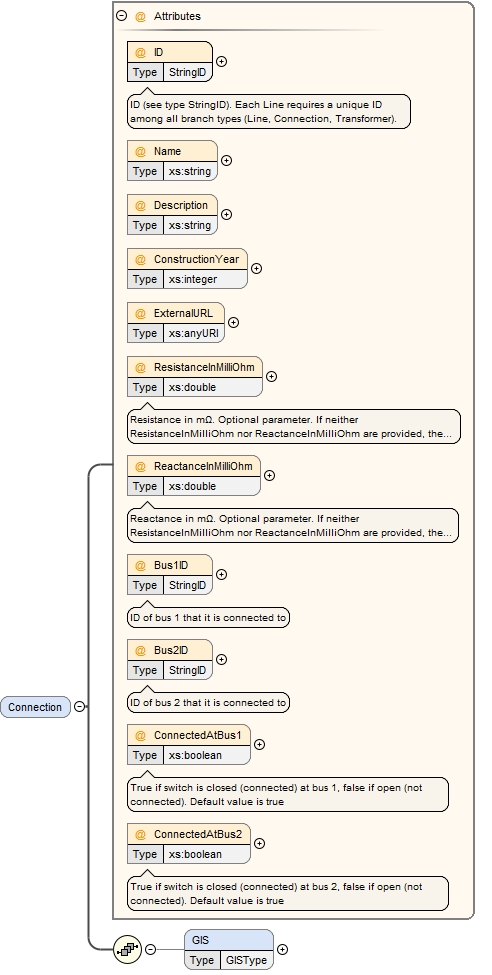
<xs:element name="CONNECTION" minOccurs="0" maxOccurs="1"><xs:complexType><xs:sequence><xs:choice><xs:element name="Connection" minOccurs="0" maxOccurs="unbounded"><xs:complexType><xs:sequence><xs:element name="GIS" type="GISType" minOccurs="0" maxOccurs="1"/></xs:sequence><xs:attribute name="ID" type="StringID" use="required"><xs:annotation><xs:documentation>ID (see type StringID). Each Line requires a unique ID among all branch types (Line, Connection, Transformer).</xs:documentation></xs:annotation></xs:attribute><xs:attribute name="Name" type="xs:string"/><xs:attribute name="Description" type="xs:string"/><xs:attribute name="ConstructionYear" type="xs:integer"/><xs:attribute name="ExternalURL" type="xs:anyURI"/><xs:attribute name="ResistanceInMilliOhm" type="xs:double"><xs:annotation><xs:documentation>Resistance in mΩ. Optional parameter. If neither ResistanceInMilliOhm nor ReactanceInMilliOhm are provided, the connection has a minimal resistance of 1mΩ (for numerical reasons).</xs:documentation></xs:annotation></xs:attribute><xs:attribute name="ReactanceInMilliOhm" type="xs:double"><xs:annotation><xs:documentation>Reactance in mΩ. Optional parameter. If neither ResistanceInMilliOhm nor ReactanceInMilliOhm are provided, the connection has a minimal resistance of 1mΩ (for numerical reasons).</xs:documentation></xs:annotation></xs:attribute><xs:attribute name="Bus1ID" type="StringID"><xs:annotation><xs:documentation>ID of bus 1 that it is connected to</xs:documentation></xs:annotation></xs:attribute><xs:attribute name="Bus2ID" type="StringID"><xs:annotation><xs:documentation>ID of bus 2 that it is connected to</xs:documentation></xs:annotation></xs:attribute><xs:attribute name="ConnectedAtBus1" type="xs:boolean"><xs:annotation><xs:documentation>True if switch is closed (connected) at bus 1, false if open (not connected). Default value is true</xs:documentation></xs:annotation></xs:attribute><xs:attribute name="ConnectedAtBus2" type="xs:boolean"><xs:annotation><xs:documentation>True if switch is closed (connected) at bus 2, false if open (not connected). Default value is true</xs:documentation></xs:annotation></xs:attribute></xs:complexType></xs:element></xs:choice></xs:sequence></xs:complexType></xs:element>
Reactance in mΩ. Optional parameter. If neither ResistanceInMilliOhm nor ReactanceInMilliOhm are provided,the connection has a minimal resistance of 1mΩ (for numerical reasons).
Resistance in mΩ. Optional parameter. If neither ResistanceInMilliOhm nor ReactanceInMilliOhm are provided,the connection has a minimal resistance of 1mΩ (for numerical reasons).
Source
<xs:element name="Connection" minOccurs="0" maxOccurs="unbounded"><xs:complexType><xs:sequence><xs:element name="GIS" type="GISType" minOccurs="0" maxOccurs="1"/></xs:sequence><xs:attribute name="ID" type="StringID" use="required"><xs:annotation><xs:documentation>ID (see type StringID). Each Line requires a unique ID among all branch types (Line, Connection, Transformer).</xs:documentation></xs:annotation></xs:attribute><xs:attribute name="Name" type="xs:string"/><xs:attribute name="Description" type="xs:string"/><xs:attribute name="ConstructionYear" type="xs:integer"/><xs:attribute name="ExternalURL" type="xs:anyURI"/><xs:attribute name="ResistanceInMilliOhm" type="xs:double"><xs:annotation><xs:documentation>Resistance in mΩ. Optional parameter. If neither ResistanceInMilliOhm nor ReactanceInMilliOhm are provided, the connection has a minimal resistance of 1mΩ (for numerical reasons).</xs:documentation></xs:annotation></xs:attribute><xs:attribute name="ReactanceInMilliOhm" type="xs:double"><xs:annotation><xs:documentation>Reactance in mΩ. Optional parameter. If neither ResistanceInMilliOhm nor ReactanceInMilliOhm are provided, the connection has a minimal resistance of 1mΩ (for numerical reasons).</xs:documentation></xs:annotation></xs:attribute><xs:attribute name="Bus1ID" type="StringID"><xs:annotation><xs:documentation>ID of bus 1 that it is connected to</xs:documentation></xs:annotation></xs:attribute><xs:attribute name="Bus2ID" type="StringID"><xs:annotation><xs:documentation>ID of bus 2 that it is connected to</xs:documentation></xs:annotation></xs:attribute><xs:attribute name="ConnectedAtBus1" type="xs:boolean"><xs:annotation><xs:documentation>True if switch is closed (connected) at bus 1, false if open (not connected). Default value is true</xs:documentation></xs:annotation></xs:attribute><xs:attribute name="ConnectedAtBus2" type="xs:boolean"><xs:annotation><xs:documentation>True if switch is closed (connected) at bus 2, false if open (not connected). Default value is true</xs:documentation></xs:annotation></xs:attribute></xs:complexType></xs:element>
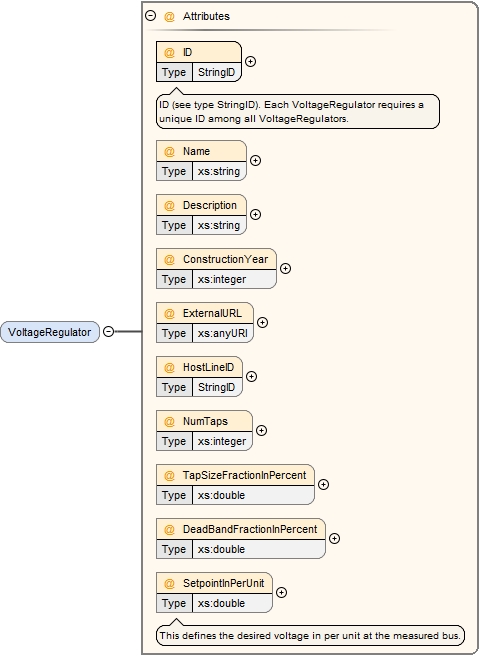
<xs:element name="VOLTAGEREGULATOR" minOccurs="0" maxOccurs="1"><xs:complexType><xs:sequence><xs:choice><xs:element name="VoltageRegulator" minOccurs="0" maxOccurs="unbounded"><xs:complexType><xs:attribute name="ID" type="StringID" use="required"><xs:annotation><xs:documentation>ID (see type StringID). Each VoltageRegulator requires a unique ID among all VoltageRegulators.</xs:documentation></xs:annotation></xs:attribute><xs:attribute name="Name" type="xs:string"/><xs:attribute name="Description" type="xs:string"/><xs:attribute name="ConstructionYear" type="xs:integer"/><xs:attribute name="ExternalURL" type="xs:anyURI"/><xs:attribute name="HostLineID" type="StringID"/><xs:attribute name="NumTaps" type="xs:integer"/><xs:attribute name="TapSizeFractionInPercent" type="xs:double"/><xs:attribute name="DeadBandFractionInPercent" type="xs:double"/><xs:attribute name="SetpointInPerUnit" type="xs:double"><xs:annotation><xs:documentation>This defines the desired voltage in per unit at the measured bus.</xs:documentation></xs:annotation></xs:attribute></xs:complexType></xs:element></xs:choice></xs:sequence></xs:complexType></xs:element>
<xs:element name="VoltageRegulator" minOccurs="0" maxOccurs="unbounded"><xs:complexType><xs:attribute name="ID" type="StringID" use="required"><xs:annotation><xs:documentation>ID (see type StringID). Each VoltageRegulator requires a unique ID among all VoltageRegulators.</xs:documentation></xs:annotation></xs:attribute><xs:attribute name="Name" type="xs:string"/><xs:attribute name="Description" type="xs:string"/><xs:attribute name="ConstructionYear" type="xs:integer"/><xs:attribute name="ExternalURL" type="xs:anyURI"/><xs:attribute name="HostLineID" type="StringID"/><xs:attribute name="NumTaps" type="xs:integer"/><xs:attribute name="TapSizeFractionInPercent" type="xs:double"/><xs:attribute name="DeadBandFractionInPercent" type="xs:double"/><xs:attribute name="SetpointInPerUnit" type="xs:double"><xs:annotation><xs:documentation>This defines the desired voltage in per unit at the measured bus.</xs:documentation></xs:annotation></xs:attribute></xs:complexType></xs:element>
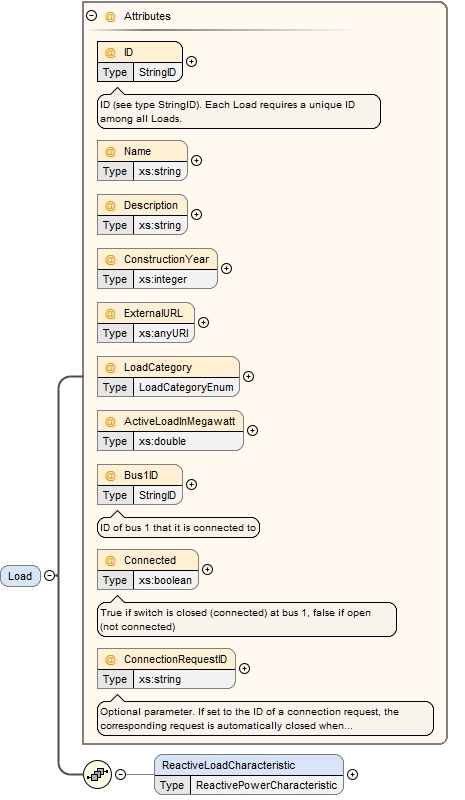
<xs:element name="LOAD" minOccurs="0" maxOccurs="1"><xs:complexType><xs:sequence><xs:element name="Load" minOccurs="0" maxOccurs="unbounded"><xs:complexType><xs:sequence><xs:element name="ReactiveLoadCharacteristic" type="ReactivePowerCharacteristic" minOccurs="0"/></xs:sequence><xs:attribute name="ID" type="StringID" use="required"><xs:annotation><xs:documentation>ID (see type StringID). Each Load requires a unique ID among all Loads.</xs:documentation></xs:annotation></xs:attribute><xs:attribute name="Name" type="xs:string"/><xs:attribute name="Description" type="xs:string"/><xs:attribute name="ConstructionYear" type="xs:integer"/><xs:attribute name="ExternalURL" type="xs:anyURI"/><xs:attribute name="LoadCategory" type="LoadCategoryEnum"/><xs:attribute name="ActiveLoadInMegawatt" type="xs:double"/><xs:attribute name="Bus1ID" type="StringID"><xs:annotation><xs:documentation>ID of bus 1 that it is connected to</xs:documentation></xs:annotation></xs:attribute><xs:attribute name="Connected" type="xs:boolean"><xs:annotation><xs:documentation>True if switch is closed (connected) at bus 1, false if open (not connected)</xs:documentation></xs:annotation></xs:attribute><xs:attribute name="ConnectionRequestID" type="xs:string"><xs:annotation><xs:documentation>Optional parameter. If set to the ID of a connection request, the corresponding request is automatically closed when the grid is imported via grid data integration.</xs:documentation></xs:annotation></xs:attribute></xs:complexType></xs:element></xs:sequence></xs:complexType></xs:element>
Optional parameter. If set to the ID of a connection request, the corresponding request is automatically closed when the grid is imported via grid data integration.
<xs:element name="Load" minOccurs="0" maxOccurs="unbounded"><xs:complexType><xs:sequence><xs:element name="ReactiveLoadCharacteristic" type="ReactivePowerCharacteristic" minOccurs="0"/></xs:sequence><xs:attribute name="ID" type="StringID" use="required"><xs:annotation><xs:documentation>ID (see type StringID). Each Load requires a unique ID among all Loads.</xs:documentation></xs:annotation></xs:attribute><xs:attribute name="Name" type="xs:string"/><xs:attribute name="Description" type="xs:string"/><xs:attribute name="ConstructionYear" type="xs:integer"/><xs:attribute name="ExternalURL" type="xs:anyURI"/><xs:attribute name="LoadCategory" type="LoadCategoryEnum"/><xs:attribute name="ActiveLoadInMegawatt" type="xs:double"/><xs:attribute name="Bus1ID" type="StringID"><xs:annotation><xs:documentation>ID of bus 1 that it is connected to</xs:documentation></xs:annotation></xs:attribute><xs:attribute name="Connected" type="xs:boolean"><xs:annotation><xs:documentation>True if switch is closed (connected) at bus 1, false if open (not connected)</xs:documentation></xs:annotation></xs:attribute><xs:attribute name="ConnectionRequestID" type="xs:string"><xs:annotation><xs:documentation>Optional parameter. If set to the ID of a connection request, the corresponding request is automatically closed when the grid is imported via grid data integration.</xs:documentation></xs:annotation></xs:attribute></xs:complexType></xs:element>
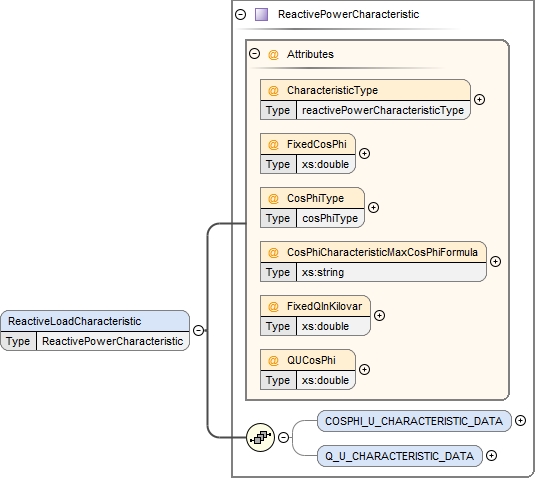
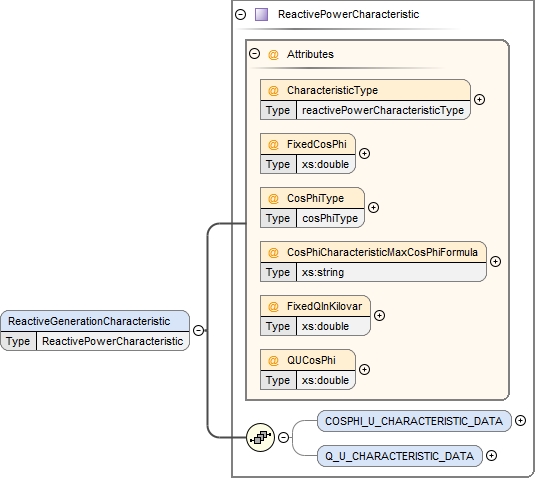
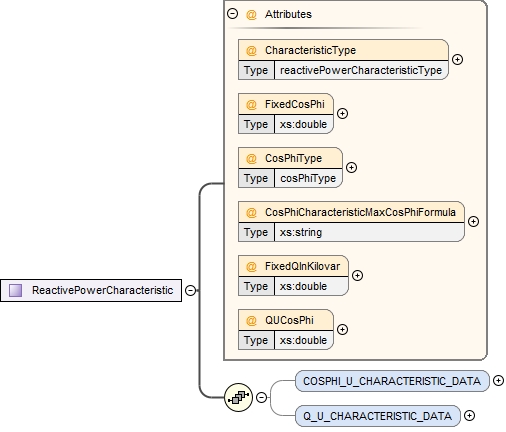
Element GRID / LOAD / Load / ReactiveLoadCharacteristic
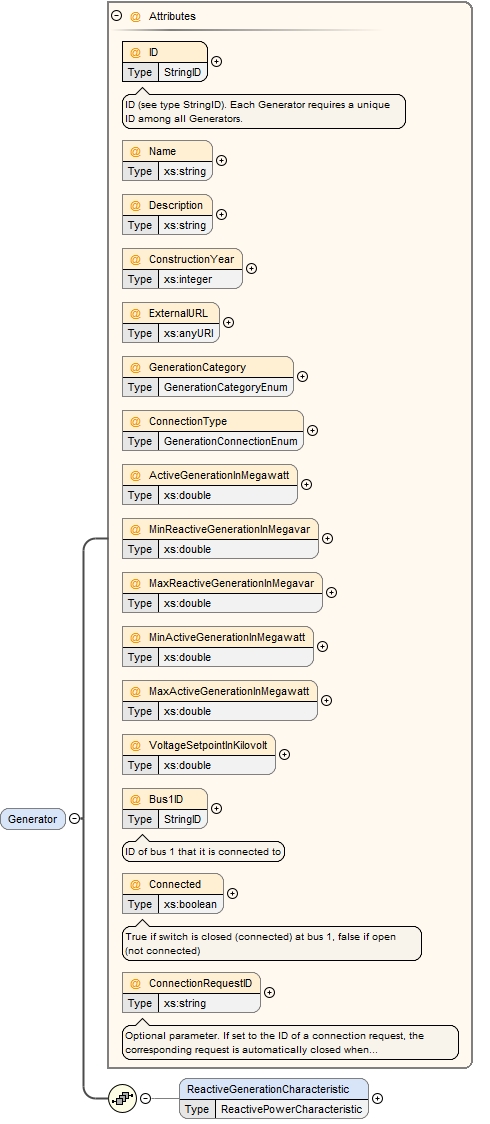
<xs:element name="GENERATOR" minOccurs="0" maxOccurs="1"><xs:complexType><xs:sequence><xs:element name="Generator" minOccurs="0" maxOccurs="unbounded"><xs:complexType><xs:sequence><xs:element name="ReactiveGenerationCharacteristic" type="ReactivePowerCharacteristic" minOccurs="0"/></xs:sequence><xs:attribute name="ID" type="StringID" use="required"><xs:annotation><xs:documentation>ID (see type StringID). Each Generator requires a unique ID among all Generators.</xs:documentation></xs:annotation></xs:attribute><xs:attribute name="Name" type="xs:string"/><xs:attribute name="Description" type="xs:string"/><xs:attribute name="ConstructionYear" type="xs:integer"/><xs:attribute name="ExternalURL" type="xs:anyURI"/><xs:attribute name="GenerationCategory" type="GenerationCategoryEnum"/><xs:attribute name="ConnectionType" type="GenerationConnectionEnum"/><xs:attribute name="ActiveGenerationInMegawatt" type="xs:double"/><xs:attribute name="MinReactiveGenerationInMegavar" type="xs:double"/><xs:attribute name="MaxReactiveGenerationInMegavar" type="xs:double"/><xs:attribute name="MinActiveGenerationInMegawatt" type="xs:double"/><xs:attribute name="MaxActiveGenerationInMegawatt" type="xs:double"/><xs:attribute name="VoltageSetpointInKilovolt" type="xs:double"/><xs:attribute name="Bus1ID" type="StringID"><xs:annotation><xs:documentation>ID of bus 1 that it is connected to</xs:documentation></xs:annotation></xs:attribute><xs:attribute name="Connected" type="xs:boolean"><xs:annotation><xs:documentation>True if switch is closed (connected) at bus 1, false if open (not connected)</xs:documentation></xs:annotation></xs:attribute><xs:attribute name="ConnectionRequestID" type="xs:string"><xs:annotation><xs:documentation>Optional parameter. If set to the ID of a connection request, the corresponding request is automatically closed when the grid is imported via grid data integration.</xs:documentation></xs:annotation></xs:attribute></xs:complexType></xs:element></xs:sequence></xs:complexType></xs:element>
Optional parameter. If set to the ID of a connection request, the corresponding request is automatically closed when the grid is imported via grid data integration.
<xs:element name="Generator" minOccurs="0" maxOccurs="unbounded"><xs:complexType><xs:sequence><xs:element name="ReactiveGenerationCharacteristic" type="ReactivePowerCharacteristic" minOccurs="0"/></xs:sequence><xs:attribute name="ID" type="StringID" use="required"><xs:annotation><xs:documentation>ID (see type StringID). Each Generator requires a unique ID among all Generators.</xs:documentation></xs:annotation></xs:attribute><xs:attribute name="Name" type="xs:string"/><xs:attribute name="Description" type="xs:string"/><xs:attribute name="ConstructionYear" type="xs:integer"/><xs:attribute name="ExternalURL" type="xs:anyURI"/><xs:attribute name="GenerationCategory" type="GenerationCategoryEnum"/><xs:attribute name="ConnectionType" type="GenerationConnectionEnum"/><xs:attribute name="ActiveGenerationInMegawatt" type="xs:double"/><xs:attribute name="MinReactiveGenerationInMegavar" type="xs:double"/><xs:attribute name="MaxReactiveGenerationInMegavar" type="xs:double"/><xs:attribute name="MinActiveGenerationInMegawatt" type="xs:double"/><xs:attribute name="MaxActiveGenerationInMegawatt" type="xs:double"/><xs:attribute name="VoltageSetpointInKilovolt" type="xs:double"/><xs:attribute name="Bus1ID" type="StringID"><xs:annotation><xs:documentation>ID of bus 1 that it is connected to</xs:documentation></xs:annotation></xs:attribute><xs:attribute name="Connected" type="xs:boolean"><xs:annotation><xs:documentation>True if switch is closed (connected) at bus 1, false if open (not connected)</xs:documentation></xs:annotation></xs:attribute><xs:attribute name="ConnectionRequestID" type="xs:string"><xs:annotation><xs:documentation>Optional parameter. If set to the ID of a connection request, the corresponding request is automatically closed when the grid is imported via grid data integration.</xs:documentation></xs:annotation></xs:attribute></xs:complexType></xs:element>
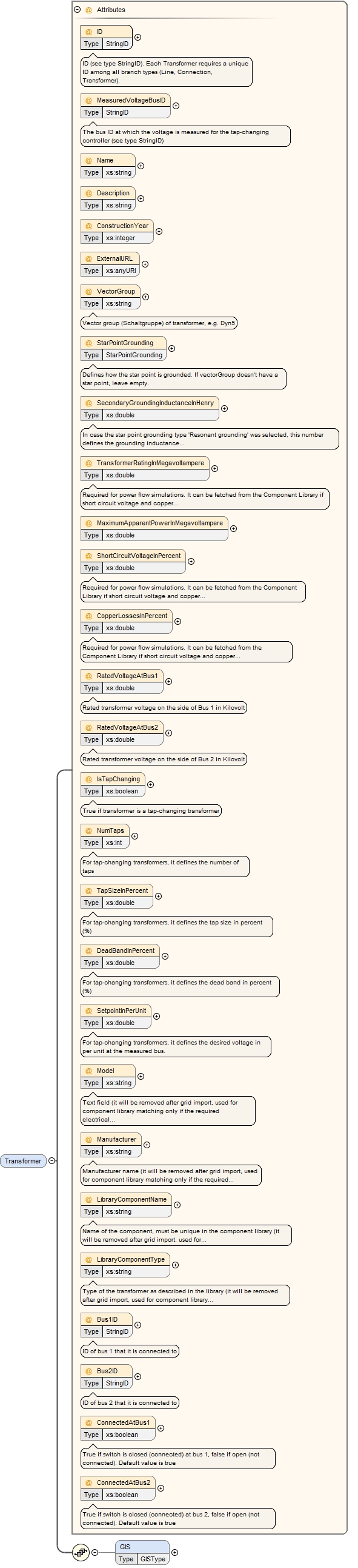
<xs:element name="TRANSFORMER" minOccurs="0" maxOccurs="1"><xs:complexType><xs:sequence><xs:choice><xs:element name="Transformer" minOccurs="0" maxOccurs="unbounded"><xs:complexType><xs:sequence><xs:element name="GIS" type="GISType" minOccurs="0" maxOccurs="1"/></xs:sequence><xs:attribute name="ID" type="StringID" use="required"><xs:annotation><xs:documentation>ID (see type StringID). Each Transformer requires a unique ID among all branch types (Line, Connection, Transformer).</xs:documentation></xs:annotation></xs:attribute><xs:attribute name="MeasuredVoltageBusID" type="StringID"><xs:annotation><xs:documentation>The bus ID at which the voltage is measured for the tap-changing controller (see type StringID)</xs:documentation></xs:annotation></xs:attribute><xs:attribute name="Name" type="xs:string"/><xs:attribute name="Description" type="xs:string"/><xs:attribute name="ConstructionYear" type="xs:integer"/><xs:attribute name="ExternalURL" type="xs:anyURI"/><xs:attribute name="VectorGroup" type="xs:string"><xs:annotation><xs:documentation>Vector group (Schaltgruppe) of transformer, e.g. Dyn5</xs:documentation></xs:annotation></xs:attribute><xs:attribute name="StarPointGrounding" type="StarPointGrounding"><xs:annotation><xs:documentation>Defines how the star point is grounded. If vectorGroup doesn't have a star point, leave empty.</xs:documentation></xs:annotation></xs:attribute><xs:attribute name="SecondaryGroundingInductanceInHenry" type="xs:double"><xs:annotation><xs:documentation>In case the star point grounding type 'Resonant grounding' was selected, this number defines the grounding inductance in Henry.</xs:documentation></xs:annotation></xs:attribute><xs:attribute name="TransformerRatingInMegavoltampere" type="xs:double"><xs:annotation><xs:documentation>Required for power flow simulations. It can be fetched from the Component Library if short circuit voltage and copper losses values are not given in the xml.</xs:documentation></xs:annotation></xs:attribute><xs:attribute name="MaximumApparentPowerInMegavoltampere" type="xs:double"/><xs:attribute name="ShortCircuitVoltageInPercent" type="xs:double"><xs:annotation><xs:documentation>Required for power flow simulations. It can be fetched from the Component Library if short circuit voltage and copper losses values are not given in the xml.</xs:documentation></xs:annotation></xs:attribute><xs:attribute name="CopperLossesInPercent" type="xs:double"><xs:annotation><xs:documentation>Required for power flow simulations. It can be fetched from the Component Library if short circuit voltage and copper losses values are not given in the xml.</xs:documentation></xs:annotation></xs:attribute><xs:attribute name="RatedVoltageAtBus1" type="xs:double"><xs:annotation><xs:documentation>Rated transformer voltage on the side of Bus 1 in Kilovolt</xs:documentation></xs:annotation></xs:attribute><xs:attribute name="RatedVoltageAtBus2" type="xs:double"><xs:annotation><xs:documentation>Rated transformer voltage on the side of Bus 2 in Kilovolt</xs:documentation></xs:annotation></xs:attribute><xs:attribute name="IsTapChanging" type="xs:boolean"><xs:annotation><xs:documentation>True if transformer is a tap-changing transformer</xs:documentation></xs:annotation></xs:attribute><xs:attribute name="NumTaps" type="xs:int"><xs:annotation><xs:documentation>For tap-changing transformers, it defines the number of taps</xs:documentation></xs:annotation></xs:attribute><xs:attribute name="TapSizeInPercent" type="xs:double"><xs:annotation><xs:documentation>For tap-changing transformers, it defines the tap size in percent (%)</xs:documentation></xs:annotation></xs:attribute><xs:attribute name="DeadBandInPercent" type="xs:double"><xs:annotation><xs:documentation>For tap-changing transformers, it defines the dead band in percent (%)</xs:documentation></xs:annotation></xs:attribute><xs:attribute name="SetpointInPerUnit" type="xs:double"><xs:annotation><xs:documentation>For tap-changing transformers, it defines the desired voltage in per unit at the measured bus.</xs:documentation></xs:annotation></xs:attribute><xs:attribute name="Model" type="xs:string"><xs:annotation><xs:documentation>Text field (it will be removed after grid import, used for component library matching only if the required electrical attributes are missing)</xs:documentation></xs:annotation></xs:attribute><xs:attribute name="Manufacturer" type="xs:string"><xs:annotation><xs:documentation>Manufacturer name (it will be removed after grid import, used for component library matching only if the required electrical attributes are missing)</xs:documentation></xs:annotation></xs:attribute><xs:attribute name="LibraryComponentName" type="xs:string"><xs:annotation><xs:documentation>Name of the component, must be unique in the component library (it will be removed after grid import, used for component library matching only if the required electrical attributes are missing)</xs:documentation></xs:annotation></xs:attribute><xs:attribute name="LibraryComponentType" type="xs:string"><xs:annotation><xs:documentation>Type of the transformer as described in the library (it will be removed after grid import, used for component library matching only if the required electrical attributes are missing)</xs:documentation></xs:annotation></xs:attribute><xs:attribute name="Bus1ID" type="StringID"><xs:annotation><xs:documentation>ID of bus 1 that it is connected to</xs:documentation></xs:annotation></xs:attribute><xs:attribute name="Bus2ID" type="StringID"><xs:annotation><xs:documentation>ID of bus 2 that it is connected to</xs:documentation></xs:annotation></xs:attribute><xs:attribute name="ConnectedAtBus1" type="xs:boolean"><xs:annotation><xs:documentation>True if switch is closed (connected) at bus 1, false if open (not connected). Default value is true</xs:documentation></xs:annotation></xs:attribute><xs:attribute name="ConnectedAtBus2" type="xs:boolean"><xs:annotation><xs:documentation>True if switch is closed (connected) at bus 2, false if open (not connected). Default value is true</xs:documentation></xs:annotation></xs:attribute></xs:complexType></xs:element></xs:choice></xs:sequence></xs:complexType></xs:element>
Required for power flow simulations. It can be fetched from the ComponentLibrary if short circuit voltage and copper losses values are not given in the xml.
Name of the component, must be unique in the component library (it will be removed after grid
import, used for component library matching only if the required electrical attributes are missing)
Type of the transformer as described in the library (it will be removed after grid import, used for component library matching only if the required electrical attributes are missing)
Required for power flow simulations. It can be fetched from the ComponentLibrary if short circuit voltage and copper losses values are not given in the xml.
Required for power flow simulations. It can be fetched from the ComponentLibrary if short circuit voltage and copper losses values are not given in the xml.
Vector group (Schaltgruppe) of transformer, e.g. Dyn5
Source
<xs:element name="Transformer" minOccurs="0" maxOccurs="unbounded"><xs:complexType><xs:sequence><xs:element name="GIS" type="GISType" minOccurs="0" maxOccurs="1"/></xs:sequence><xs:attribute name="ID" type="StringID" use="required"><xs:annotation><xs:documentation>ID (see type StringID). Each Transformer requires a unique ID among all branch types (Line, Connection, Transformer).</xs:documentation></xs:annotation></xs:attribute><xs:attribute name="MeasuredVoltageBusID" type="StringID"><xs:annotation><xs:documentation>The bus ID at which the voltage is measured for the tap-changing controller (see type StringID)</xs:documentation></xs:annotation></xs:attribute><xs:attribute name="Name" type="xs:string"/><xs:attribute name="Description" type="xs:string"/><xs:attribute name="ConstructionYear" type="xs:integer"/><xs:attribute name="ExternalURL" type="xs:anyURI"/><xs:attribute name="VectorGroup" type="xs:string"><xs:annotation><xs:documentation>Vector group (Schaltgruppe) of transformer, e.g. Dyn5</xs:documentation></xs:annotation></xs:attribute><xs:attribute name="StarPointGrounding" type="StarPointGrounding"><xs:annotation><xs:documentation>Defines how the star point is grounded. If vectorGroup doesn't have a star point, leave empty.</xs:documentation></xs:annotation></xs:attribute><xs:attribute name="SecondaryGroundingInductanceInHenry" type="xs:double"><xs:annotation><xs:documentation>In case the star point grounding type 'Resonant grounding' was selected, this number defines the grounding inductance in Henry.</xs:documentation></xs:annotation></xs:attribute><xs:attribute name="TransformerRatingInMegavoltampere" type="xs:double"><xs:annotation><xs:documentation>Required for power flow simulations. It can be fetched from the Component Library if short circuit voltage and copper losses values are not given in the xml.</xs:documentation></xs:annotation></xs:attribute><xs:attribute name="MaximumApparentPowerInMegavoltampere" type="xs:double"/><xs:attribute name="ShortCircuitVoltageInPercent" type="xs:double"><xs:annotation><xs:documentation>Required for power flow simulations. It can be fetched from the Component Library if short circuit voltage and copper losses values are not given in the xml.</xs:documentation></xs:annotation></xs:attribute><xs:attribute name="CopperLossesInPercent" type="xs:double"><xs:annotation><xs:documentation>Required for power flow simulations. It can be fetched from the Component Library if short circuit voltage and copper losses values are not given in the xml.</xs:documentation></xs:annotation></xs:attribute><xs:attribute name="RatedVoltageAtBus1" type="xs:double"><xs:annotation><xs:documentation>Rated transformer voltage on the side of Bus 1 in Kilovolt</xs:documentation></xs:annotation></xs:attribute><xs:attribute name="RatedVoltageAtBus2" type="xs:double"><xs:annotation><xs:documentation>Rated transformer voltage on the side of Bus 2 in Kilovolt</xs:documentation></xs:annotation></xs:attribute><xs:attribute name="IsTapChanging" type="xs:boolean"><xs:annotation><xs:documentation>True if transformer is a tap-changing transformer</xs:documentation></xs:annotation></xs:attribute><xs:attribute name="NumTaps" type="xs:int"><xs:annotation><xs:documentation>For tap-changing transformers, it defines the number of taps</xs:documentation></xs:annotation></xs:attribute><xs:attribute name="TapSizeInPercent" type="xs:double"><xs:annotation><xs:documentation>For tap-changing transformers, it defines the tap size in percent (%)</xs:documentation></xs:annotation></xs:attribute><xs:attribute name="DeadBandInPercent" type="xs:double"><xs:annotation><xs:documentation>For tap-changing transformers, it defines the dead band in percent (%)</xs:documentation></xs:annotation></xs:attribute><xs:attribute name="SetpointInPerUnit" type="xs:double"><xs:annotation><xs:documentation>For tap-changing transformers, it defines the desired voltage in per unit at the measured bus.</xs:documentation></xs:annotation></xs:attribute><xs:attribute name="Model" type="xs:string"><xs:annotation><xs:documentation>Text field (it will be removed after grid import, used for component library matching only if the required electrical attributes are missing)</xs:documentation></xs:annotation></xs:attribute><xs:attribute name="Manufacturer" type="xs:string"><xs:annotation><xs:documentation>Manufacturer name (it will be removed after grid import, used for component library matching only if the required electrical attributes are missing)</xs:documentation></xs:annotation></xs:attribute><xs:attribute name="LibraryComponentName" type="xs:string"><xs:annotation><xs:documentation>Name of the component, must be unique in the component library (it will be removed after grid import, used for component library matching only if the required electrical attributes are missing)</xs:documentation></xs:annotation></xs:attribute><xs:attribute name="LibraryComponentType" type="xs:string"><xs:annotation><xs:documentation>Type of the transformer as described in the library (it will be removed after grid import, used for component library matching only if the required electrical attributes are missing)</xs:documentation></xs:annotation></xs:attribute><xs:attribute name="Bus1ID" type="StringID"><xs:annotation><xs:documentation>ID of bus 1 that it is connected to</xs:documentation></xs:annotation></xs:attribute><xs:attribute name="Bus2ID" type="StringID"><xs:annotation><xs:documentation>ID of bus 2 that it is connected to</xs:documentation></xs:annotation></xs:attribute><xs:attribute name="ConnectedAtBus1" type="xs:boolean"><xs:annotation><xs:documentation>True if switch is closed (connected) at bus 1, false if open (not connected). Default value is true</xs:documentation></xs:annotation></xs:attribute><xs:attribute name="ConnectedAtBus2" type="xs:boolean"><xs:annotation><xs:documentation>True if switch is closed (connected) at bus 2, false if open (not connected). Default value is true</xs:documentation></xs:annotation></xs:attribute></xs:complexType></xs:element>
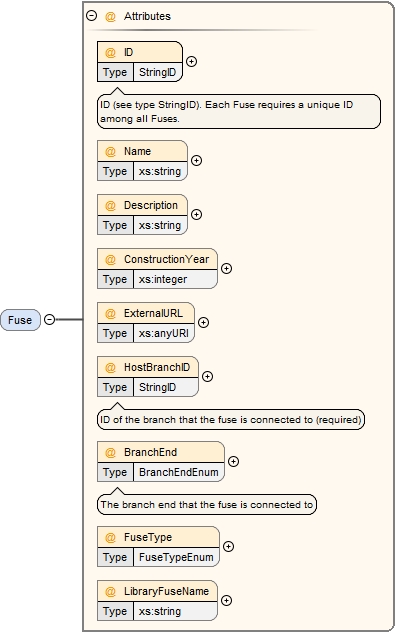
<xs:element name="FUSE" minOccurs="0" maxOccurs="1"><xs:complexType><xs:sequence><xs:element name="Fuse" minOccurs="0" maxOccurs="unbounded"><xs:complexType><xs:attribute name="ID" type="StringID" use="required"><xs:annotation><xs:documentation>ID (see type StringID). Each Fuse requires a unique ID among all Fuses.</xs:documentation></xs:annotation></xs:attribute><xs:attribute name="Name" type="xs:string"/><xs:attribute name="Description" type="xs:string"/><xs:attribute name="ConstructionYear" type="xs:integer"/><xs:attribute name="ExternalURL" type="xs:anyURI"/><xs:attribute name="HostBranchID" type="StringID"><xs:annotation><xs:documentation>ID of the branch that the fuse is connected to (required)</xs:documentation></xs:annotation></xs:attribute><xs:attribute name="BranchEnd" type="BranchEndEnum"><xs:annotation><xs:documentation>The branch end that the fuse is connected to</xs:documentation></xs:annotation></xs:attribute><xs:attribute name="FuseType" type="FuseTypeEnum"/><xs:attribute name="LibraryFuseName" type="xs:string"/></xs:complexType></xs:element></xs:sequence></xs:complexType></xs:element>
<xs:element name="Fuse" minOccurs="0" maxOccurs="unbounded"><xs:complexType><xs:attribute name="ID" type="StringID" use="required"><xs:annotation><xs:documentation>ID (see type StringID). Each Fuse requires a unique ID among all Fuses.</xs:documentation></xs:annotation></xs:attribute><xs:attribute name="Name" type="xs:string"/><xs:attribute name="Description" type="xs:string"/><xs:attribute name="ConstructionYear" type="xs:integer"/><xs:attribute name="ExternalURL" type="xs:anyURI"/><xs:attribute name="HostBranchID" type="StringID"><xs:annotation><xs:documentation>ID of the branch that the fuse is connected to (required)</xs:documentation></xs:annotation></xs:attribute><xs:attribute name="BranchEnd" type="BranchEndEnum"><xs:annotation><xs:documentation>The branch end that the fuse is connected to</xs:documentation></xs:annotation></xs:attribute><xs:attribute name="FuseType" type="FuseTypeEnum"/><xs:attribute name="LibraryFuseName" type="xs:string"/></xs:complexType></xs:element>
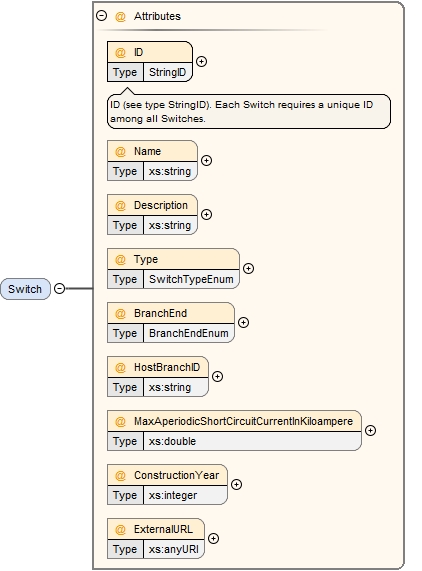
<xs:element name="Switch" minOccurs="0" maxOccurs="unbounded"><xs:complexType><xs:attribute name="ID" type="StringID" use="required"><xs:annotation><xs:documentation>ID (see type StringID). Each Switch requires a unique ID among all Switches.</xs:documentation></xs:annotation></xs:attribute><xs:attribute name="Name" type="xs:string"/><xs:attribute name="Description" type="xs:string"/><xs:attribute name="Type" type="SwitchTypeEnum"/><xs:attribute name="BranchEnd" type="BranchEndEnum"/><xs:attribute name="HostBranchID" type="xs:string"/><xs:attribute name="MaxAperiodicShortCircuitCurrentInKiloampere" type="xs:double"/><xs:attribute name="ConstructionYear" type="xs:integer"/><xs:attribute name="ExternalURL" type="xs:anyURI"/></xs:complexType></xs:element>
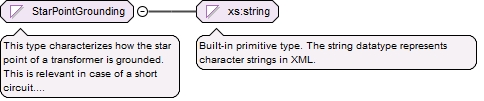
Simple Type StarPointGrounding
Namespace
No namespace
Annotations
This type characterizes how the star point of a transformer is grounded. This is relevant in case of a short circuit.Not all transformers have a star point. Only if the vector group contains a 'y' character on the secondary side, e.g. 'Dy', the transformer has a star point.In the Adaptricity platform the StarPointGrounding property is interpreted as grounding information for a star point the secondary side of the transformer.This property is not mandatory. However, if not provided for transformers that do have a star point on the secondary side, short circuit calculation is not possible.
Diagram
Type
restriction of xs:string
Facets
enumeration
Direct grounding
The start point is connected to ground by a (low resistance) cable.
enumeration
Resonant grounding
The start point is connected to ground by an inductor.
enumeration
Insulated grid
The start point is not connected to ground (insulated).
<xs:simpleType name="StarPointGrounding"><xs:annotation><xs:documentation>This type characterizes how the star point of a transformer is grounded. This is relevant in case of a short circuit. Not all transformers have a star point. Only if the vector group contains a 'y' character on the secondary side, e.g. 'Dy', the transformer has a star point. In the Adaptricity platform the StarPointGrounding property is interpreted as grounding information for a star point the secondary side of the transformer. This property is not mandatory. However, if not provided for transformers that do have a star point on the secondary side, short circuit calculation is not possible.</xs:documentation></xs:annotation><xs:restriction base="xs:string"><xs:enumeration value="Direct grounding"><xs:annotation><xs:documentation>The start point is connected to ground by a (low resistance) cable.</xs:documentation></xs:annotation></xs:enumeration><xs:enumeration value="Resonant grounding"><xs:annotation><xs:documentation>The start point is connected to ground by an inductor.</xs:documentation></xs:annotation></xs:enumeration><xs:enumeration value="Insulated grid"><xs:annotation><xs:documentation>The start point is not connected to ground (insulated).</xs:documentation></xs:annotation></xs:enumeration></xs:restriction></xs:simpleType>
Simple Type ShapeTypeEnum
Namespace
No namespace
Diagram
Type
restriction of xs:string
Facets
enumeration
Point
Shape type "Point" needs in its child node element "Points" exactly one "Point" element.
enumeration
Line
Shape type "Line" needs in its child node element "Points" two or more "Point" elements.
enumeration
Polygon
Shape type "Polygon" needs in its child node element "Points" three or more "Point" elements.
<xs:simpleType name="ShapeTypeEnum"><xs:restriction base="xs:string"><xs:enumeration value="Point"><xs:annotation><xs:documentation>Shape type "Point" needs in its child node element "Points" exactly one "Point" element.</xs:documentation></xs:annotation></xs:enumeration><xs:enumeration value="Line"><xs:annotation><xs:documentation>Shape type "Line" needs in its child node element "Points" two or more "Point" elements.</xs:documentation></xs:annotation></xs:enumeration><xs:enumeration value="Polygon"><xs:annotation><xs:documentation>Shape type "Polygon" needs in its child node element "Points" three or more "Point" elements.</xs:documentation></xs:annotation></xs:enumeration></xs:restriction></xs:simpleType>
Simple Type BusTypeEnum
Namespace
No namespace
Annotations
Each bus can optionally have a bus Type. Depending on the type the bus is visualized differently in the schematic grid viewer.Unless indicated, this property doesn't affect calculations.
Diagram
Type
restriction of xs:string
Facets
enumeration
TransformerStation
Indicates the location of a transformer station.Useful in MV grid to see where transformers are connected (in the same grid model, or in a subgrid).
enumeration
DistributionCabinet
A distribtion cabinet (Ger. 'Verteilkabine') is used in LV grids to distribute the power to different households or streets.They sometimes include metering devices.
enumeration
CableJunction
A cable junction (Ger. 'Muffe') is used to connect two different cables.Connecting other grid elements is usually not possible.
enumeration
BusBar
A bus bar (Ger. 'Sammelschiene') is a metallic bar inside a transformer station used for high current power distribution.
enumeration
ConnectionPoint
A connection point (Ger. 'Hausanschluss') represents a customer (private or commercial).
enumeration
SmallConnectionPoint
A small connection point (Ger. 'Kleinverbraucheranschluss') is a small power consumer, typically located in public areas, such as ticket machines or street lighting.
enumeration
Virtual
Virtual buses are buses that do not exist in the physical reality but are created for the sake of the grid modelling.
enumeration
PreferredNetworkFeederLocation
If the grid model does not have a network feeder, this defines the host bus of the network feeder that is created by the software. If the grid model has a network feeder it is recommended to use this type for the host bus.
enumeration
Other
Other buses that don't match any of the above types.
<xs:simpleType name="BusTypeEnum"><xs:annotation><xs:documentation>Each bus can optionally have a bus Type. Depending on the type the bus is visualized differently in the schematic grid viewer. Unless indicated, this property doesn't affect calculations.</xs:documentation></xs:annotation><xs:restriction base="xs:string"><xs:enumeration value="TransformerStation"><xs:annotation><xs:documentation>Indicates the location of a transformer station. Useful in MV grid to see where transformers are connected (in the same grid model, or in a subgrid).</xs:documentation></xs:annotation></xs:enumeration><xs:enumeration value="DistributionCabinet"><xs:annotation><xs:documentation>A distribtion cabinet (Ger. 'Verteilkabine') is used in LV grids to distribute the power to different households or streets. They sometimes include metering devices.</xs:documentation></xs:annotation></xs:enumeration><xs:enumeration value="CableJunction"><xs:annotation><xs:documentation>A cable junction (Ger. 'Muffe') is used to connect two different cables. Connecting other grid elements is usually not possible.</xs:documentation></xs:annotation></xs:enumeration><xs:enumeration value="BusBar"><xs:annotation><xs:documentation>A bus bar (Ger. 'Sammelschiene') is a metallic bar inside a transformer station used for high current power distribution.</xs:documentation></xs:annotation></xs:enumeration><xs:enumeration value="ConnectionPoint"><xs:annotation><xs:documentation>A connection point (Ger. 'Hausanschluss') represents a customer (private or commercial).</xs:documentation></xs:annotation></xs:enumeration><xs:enumeration value="SmallConnectionPoint"><xs:annotation><xs:documentation>A small connection point (Ger. 'Kleinverbraucheranschluss') is a small power consumer, typically located in public areas, such as ticket machines or street lighting.</xs:documentation></xs:annotation></xs:enumeration><xs:enumeration value="Virtual"><xs:annotation><xs:documentation>Virtual buses are buses that do not exist in the physical reality but are created for the sake of the grid modelling.</xs:documentation></xs:annotation></xs:enumeration><xs:enumeration value="PreferredNetworkFeederLocation"><xs:annotation><xs:documentation>If the grid model does not have a network feeder, this defines the host bus of the network feeder that is created by the software. If the grid model has a network feeder it is recommended to use this type for the host bus.</xs:documentation></xs:annotation></xs:enumeration><xs:enumeration value="Other"><xs:annotation><xs:documentation>Other buses that don't match any of the above types.</xs:documentation></xs:annotation></xs:enumeration></xs:restriction></xs:simpleType>
Simple Type BranchEndEnum
Namespace
No namespace
Annotations
The BranchEndEnum at which end of a branch (line, transformer, connection) something is measured/installed .
Diagram
Type
restriction of xs:string
Facets
enumeration
Bus1
The end of the branch where the bus1 is connected.
enumeration
Bus2
The end of the branch where the bus2 is connected.
<xs:simpleType name="BranchEndEnum"><xs:annotation><xs:documentation>The BranchEndEnum at which end of a branch (line, transformer, connection) something is measured/installed .</xs:documentation></xs:annotation><xs:restriction base="xs:string"><xs:enumeration value="Bus1"><xs:annotation><xs:documentation>The end of the branch where the bus1 is connected.</xs:documentation></xs:annotation></xs:enumeration><xs:enumeration value="Bus2"><xs:annotation><xs:documentation>The end of the branch where the bus2 is connected.</xs:documentation></xs:annotation></xs:enumeration></xs:restriction></xs:simpleType>
Simple Type GenerationCategoryEnum
Namespace
No namespace
Annotations
Generators can have a category. This is used for filtering.
Diagram
Type
restriction of xs:string
Facets
enumeration
PV
A photovoltaic generator (solar power).
enumeration
Wind
A Wind turbine.
enumeration
Biomass
In a biomass power plant is some kind of biofuel (e.g. wood) is burned to produce electricity.
enumeration
Hydro
A power plant where water is used to power a generator.For example with a high pressure from a reservior (pumped hydro) or low pressure (river).
enumeration
Gas turbine
A power plant where gas is burned to power a generator.
enumeration
Combined heat and power
A power plant where a fuel is burned to provide thermal and electrical energy.
enumeration
Equivalent aggregated generation
When a grid is split, in each subgrid, the generation is summed up and placed in the higher voltage grid(where the subgrid was extracted from). This generator has the type 'Equivalent aggregated generation'.
enumeration
Other
A generator that doesn't match any other category.
<xs:simpleType name="GenerationCategoryEnum"><xs:annotation><xs:documentation>Generators can have a category. This is used for filtering.</xs:documentation></xs:annotation><xs:restriction base="xs:string"><xs:enumeration value="PV"><xs:annotation><xs:documentation>A photovoltaic generator (solar power).</xs:documentation></xs:annotation></xs:enumeration><xs:enumeration value="Wind"><xs:annotation><xs:documentation>A Wind turbine.</xs:documentation></xs:annotation></xs:enumeration><xs:enumeration value="Biomass"><xs:annotation><xs:documentation>In a biomass power plant is some kind of biofuel (e.g. wood) is burned to produce electricity.</xs:documentation></xs:annotation></xs:enumeration><xs:enumeration value="Hydro"><xs:annotation><xs:documentation>A power plant where water is used to power a generator. For example with a high pressure from a reservior (pumped hydro) or low pressure (river).</xs:documentation></xs:annotation></xs:enumeration><xs:enumeration value="Gas turbine"><xs:annotation><xs:documentation>A power plant where gas is burned to power a generator.</xs:documentation></xs:annotation></xs:enumeration><xs:enumeration value="Combined heat and power"><xs:annotation><xs:documentation>A power plant where a fuel is burned to provide thermal and electrical energy.</xs:documentation></xs:annotation></xs:enumeration><xs:enumeration value="Equivalent aggregated generation"><xs:annotation><xs:documentation>When a grid is split, in each subgrid, the generation is summed up and placed in the higher voltage grid (where the subgrid was extracted from). This generator has the type 'Equivalent aggregated generation'.</xs:documentation></xs:annotation></xs:enumeration><xs:enumeration value="Other"><xs:annotation><xs:documentation>A generator that doesn't match any other category.</xs:documentation></xs:annotation></xs:enumeration></xs:restriction></xs:simpleType>
Simple Type LoadCategoryEnum
Namespace
No namespace
Diagram
Type
restriction of xs:string
Facets
enumeration
Residential
Load of a private customer
enumeration
Industrial
Load of an industrial customer
enumeration
Heat pump
A heat pump, e.g. to heat a building.
enumeration
Electric heating
Electric resistive heating, e.g. to heat a building.As this is very inefficient, this is forbidden in some countries.
enumeration
Electric water heater
For example a hot water boiler.
enumeration
EV charger
Charger of an electric vehicle
enumeration
Stationary battery
A Battery. A batterie defined as static load will always consumer power.Batteries with a charge and discharge behavior cannot be modelled in a static grid model.They can be applied in the software as part of a 'Scenario'.
enumeration
Equivalent aggregated load
When a grid is split, in each subgrid, the load is summed up and placed in the higher voltage grid(where the subgrid was extracted from). This load has the type 'Equivalent aggregated load'.
<xs:simpleType name="LoadCategoryEnum"><xs:restriction base="xs:string"><xs:enumeration value="Residential"><xs:annotation><xs:documentation>Load of a private customer</xs:documentation></xs:annotation></xs:enumeration><xs:enumeration value="Industrial"><xs:annotation><xs:documentation>Load of an industrial customer</xs:documentation></xs:annotation></xs:enumeration><xs:enumeration value="Heat pump"><xs:annotation><xs:documentation>A heat pump, e.g. to heat a building.</xs:documentation></xs:annotation></xs:enumeration><xs:enumeration value="Electric heating"><xs:annotation><xs:documentation>Electric resistive heating, e.g. to heat a building. As this is very inefficient, this is forbidden in some countries.</xs:documentation></xs:annotation></xs:enumeration><xs:enumeration value="Electric water heater"><xs:annotation><xs:documentation>For example a hot water boiler.</xs:documentation></xs:annotation></xs:enumeration><xs:enumeration value="EV charger"><xs:annotation><xs:documentation>Charger of an electric vehicle</xs:documentation></xs:annotation></xs:enumeration><xs:enumeration value="Stationary battery"><xs:annotation><xs:documentation>A Battery. A batterie defined as static load will always consumer power. Batteries with a charge and discharge behavior cannot be modelled in a static grid model. They can be applied in the software as part of a 'Scenario'.</xs:documentation></xs:annotation></xs:enumeration><xs:enumeration value="Equivalent aggregated load"><xs:annotation><xs:documentation>When a grid is split, in each subgrid, the load is summed up and placed in the higher voltage grid (where the subgrid was extracted from). This load has the type 'Equivalent aggregated load'.</xs:documentation></xs:annotation></xs:enumeration><xs:enumeration value="Other"><xs:annotation><xs:documentation>A load that doesn't match any other category.</xs:documentation></xs:annotation></xs:enumeration></xs:restriction></xs:simpleType>
Simple Type FuseTypeEnum
Namespace
No namespace
Diagram
Type
restriction of xs:string
Facets
enumeration
Grid
A grid fuse protects a larger (usually public) part of the distribution grid from a short circuit.They are typically found in transformer stations and distribution cabinets.Grid fuses are dimensioned to withstand a higher current and melt slowler than a connection fuse, allowing connection fuses to melt first.
enumeration
Connection
A connection fuse protects an individual customer from a short circuit.They are installed where the customer is connected to the grid.Connection fuses are dimension to withstand a lower current and melt faster than grid fuses, preventing the grid fuses to disconnect a much larger part of the grid.
<xs:simpleType name="FuseTypeEnum"><xs:restriction base="xs:string"><xs:annotation><xs:documentation>Characterizes the location of a fuse.</xs:documentation></xs:annotation><xs:enumeration value="Grid"><xs:annotation><xs:documentation>A grid fuse protects a larger (usually public) part of the distribution grid from a short circuit. They are typically found in transformer stations and distribution cabinets. Grid fuses are dimensioned to withstand a higher current and melt slowler than a connection fuse, allowing connection fuses to melt first.</xs:documentation></xs:annotation></xs:enumeration><xs:enumeration value="Connection"><xs:annotation><xs:documentation>A connection fuse protects an individual customer from a short circuit. They are installed where the customer is connected to the grid. Connection fuses are dimension to withstand a lower current and melt faster than grid fuses, preventing the grid fuses to disconnect a much larger part of the grid.</xs:documentation></xs:annotation></xs:enumeration></xs:restriction></xs:simpleType>
Simple Type GenerationConnectionEnum
Namespace
No namespace
Diagram
Type
restriction of xs:string
Facets
enumeration
Direct
This option is deprecated and should not be used anymore.
enumeration
Inverter
An inverter (Ger. 'Wechselrichter') converts DC power to AC power. It is typically used for solar PV.
enumeration
Synchronous Machine
Synchronous generators have a efficieny and are typically used in large power plants (such as hydro or nuclear).
enumeration
Asynchronous Machine
Asynchronous machines are sometimes used in small generators (Diesel generator, wind power, hydro ).
enumeration
Converter
A converter (Ger. 'Frequenzumrichter') converts the frequency and amplitude.
<xs:simpleType name="GenerationConnectionEnum"><xs:restriction base="xs:string"><xs:annotation><xs:documentation>Discribes how a generator is connected to the grid. The connection type describes, to what extent a generator contributes to a short circuit.</xs:documentation></xs:annotation><xs:enumeration value="Direct"><xs:annotation><xs:documentation>This option is deprecated and should not be used anymore.</xs:documentation></xs:annotation></xs:enumeration><xs:enumeration value="Inverter"><xs:annotation><xs:documentation>An inverter (Ger. 'Wechselrichter') converts DC power to AC power. It is typically used for solar PV.</xs:documentation></xs:annotation></xs:enumeration><xs:enumeration value="Synchronous Machine"><xs:annotation><xs:documentation>Synchronous generators have a efficieny and are typically used in large power plants (such as hydro or nuclear).</xs:documentation></xs:annotation></xs:enumeration><xs:enumeration value="Asynchronous Machine"><xs:annotation><xs:documentation>Asynchronous machines are sometimes used in small generators (Diesel generator, wind power, hydro ).</xs:documentation></xs:annotation></xs:enumeration><xs:enumeration value="Converter"><xs:annotation><xs:documentation>A converter (Ger. 'Frequenzumrichter') converts the frequency and amplitude.</xs:documentation></xs:annotation></xs:enumeration></xs:restriction></xs:simpleType>
Simple Type StringID
Namespace
No namespace
Annotations
A valid ID consists of lowercase letters, digits, _, and @. Uppercase letters are accepted for importing the grid but need to be corrected in the Grid Editor in the software before the grid can be used.Each element requires a unique ID. Usually IDs must be unique among their own type.For branch types (Line, DiscSwitch, LoadSwitch, CircuitBreaker, Transformer) all IDs must be unique among all branch types. E.g. A line must not have the same ID as a DiscSwitch.
<xs:simpleType name="StringID"><xs:annotation><xs:documentation>A valid ID consists of lowercase letters, digits, _, and @. Uppercase letters are accepted for importing the grid but need to be corrected in the Grid Editor in the software before the grid can be used. Each element requires a unique ID. Usually IDs must be unique among their own type. For branch types (Line, DiscSwitch, LoadSwitch, CircuitBreaker, Transformer) all IDs must be unique among all branch types. E.g. A line must not have the same ID as a DiscSwitch.</xs:documentation></xs:annotation><xs:restriction base="xs:string"><xs:pattern value="[a-zA-Z0-9_@]+"/></xs:restriction></xs:simpleType>
Simple Type ProtectionDeviceDirection
Namespace
No namespace
Diagram
Type
restriction of xs:string
Facets
enumeration
Undirected
Faults in both directions are cleared. This option must not be used for Distance Protection Devices as they cannot be undirected.
enumeration
Bus 1 to Bus 2
Only faults visible when 'looking' from bus1 to bus2 are cleared.
enumeration
Bus 2 to Bus 1
Only faults visible when 'looking' from bus2 to bus1 are cleared.
<xs:simpleType name="ProtectionDeviceDirection"><xs:restriction base="xs:string"><xs:annotation><xs:documentation>Protection devices can be directed in the sense that they only clear faults (short circuits) that occur on a specific side of the device.</xs:documentation></xs:annotation><xs:enumeration value="Undirected"><xs:annotation><xs:documentation>Faults in both directions are cleared. This option must not be used for Distance Protection Devices as they cannot be undirected.</xs:documentation></xs:annotation></xs:enumeration><xs:enumeration value="Bus 1 to Bus 2"><xs:annotation><xs:documentation>Only faults visible when 'looking' from bus1 to bus2 are cleared.</xs:documentation></xs:annotation></xs:enumeration><xs:enumeration value="Bus 2 to Bus 1"><xs:annotation><xs:documentation>Only faults visible when 'looking' from bus2 to bus1 are cleared.</xs:documentation></xs:annotation></xs:enumeration></xs:restriction></xs:simpleType>
Simple Type SwitchTypeEnum
Namespace
No namespace
Diagram
Type
restriction of xs:string
Facets
enumeration
Circuit Breaker
A circuit breaker (Ger. 'Leitungsschutzschalter') is an automatically operated electricalswitch designed to protect an electrical circuit from damage caused by excess current from an overload or short circuit.It can switch under load and has a mechanism to suppress electric arcs.
enumeration
Disconnect Switch
A disconnect switch (Ger. 'Trennschalter') is used to ensure that an electrical circuit is completelyde-energized for service or maintenance. It connot switch under load.
enumeration
Load Switch
The switch is a load 2 (Ger. 'Lastschalter') is a switch designed to connect and disconnect devices undernormal operating conditions. It has a mechanism to suppress electric arcs caused by normal operational currents (not fault currents).
<xs:simpleType name="SwitchTypeEnum"><xs:restriction base="xs:string"><xs:enumeration value="Circuit Breaker"><xs:annotation><xs:documentation>A circuit breaker (Ger. 'Leitungsschutzschalter') is an automatically operated electrical switch designed to protect an electrical circuit from damage caused by excess current from an overload or short circuit. It can switch under load and has a mechanism to suppress electric arcs.</xs:documentation></xs:annotation></xs:enumeration><xs:enumeration value="Disconnect Switch"><xs:annotation><xs:documentation>A disconnect switch (Ger. 'Trennschalter') is used to ensure that an electrical circuit is completely de-energized for service or maintenance. It connot switch under load.</xs:documentation></xs:annotation></xs:enumeration><xs:enumeration value="Load Switch"><xs:annotation><xs:documentation>The switch is a load 2 (Ger. 'Lastschalter') is a switch designed to connect and disconnect devices under normal operating conditions. It has a mechanism to suppress electric arcs caused by normal operational currents (not fault currents).</xs:documentation></xs:annotation></xs:enumeration></xs:restriction></xs:simpleType>
<xs:complexType name="ProtectionDevice"><xs:attribute name="ID" type="StringID" use="required"><xs:annotation><xs:documentation>ID (see type StringID). Each ProtectionDevice requires a unique ID among all ProtectionDevices.</xs:documentation></xs:annotation></xs:attribute><xs:attribute name="Name" type="xs:string"/><xs:attribute name="Description" type="xs:string"/><xs:attribute name="ConstructionYear" type="xs:integer"/><xs:attribute name="ExternalURL" type="xs:anyURI"/><xs:attribute name="Direction" type="ProtectionDeviceDirection"/><xs:attribute name="HostSwitchID" type="StringID"><xs:annotation><xs:documentation>ID of the switch where the protection device is connected to (required). Previously called 'HostCircuitBreakerID'.</xs:documentation></xs:annotation></xs:attribute></xs:complexType>
<xs:complexType name="DefiniteTimeOvercurrentProtection"><xs:complexContent><xs:extension base="ProtectionDevice"><xs:sequence><xs:element name="STAGE" minOccurs="0" maxOccurs="1"><xs:complexType><xs:sequence><xs:element name="Stage" minOccurs="0" maxOccurs="unbounded"><xs:annotation><xs:documentation>A DTOP - definite time overcurrent protection device (Ger. 'UMZ - Unabhängiger Maximalstromzeitschutz') is a protection device, where the swich-off time depends on the short circuit current. DTOPs are configured, such that high currents are cleared faster than small currents. The reason is that high currents indicate a close proximity to the fault location. This current-time-dependency is expressed as list of time-current pair, wich discribes a step-shaped curve. Example: - 1kA / 3.0s - 2kA / 1.5s - 4kA / 0.5s The above list of current/time pairs represents this behavior: - Fault currents below 1kA are not cleared - Fault currents between 1kA and 2kA are cleared after 3s - Fault currents between 2kA and 4kA are cleared after 1.5s - Fault currents above 4kA are cleared after 0.5s</xs:documentation></xs:annotation><xs:complexType><xs:attribute name="CurrentInKiloampere" type="xs:double"><xs:annotation><xs:documentation>When measuring a current between this current and the next higher CurrentInKiloampere, the devices clears the fault after SwitchOffTimeInSeconds seconds.</xs:documentation></xs:annotation></xs:attribute><xs:attribute name="SwitchOffTimeInSeconds" type="xs:double"><xs:annotation><xs:documentation>The time after which the fault is cleared.</xs:documentation></xs:annotation></xs:attribute></xs:complexType></xs:element></xs:sequence></xs:complexType></xs:element></xs:sequence></xs:extension></xs:complexContent></xs:complexType>
When a distance protection device recognizes a fault in it's direction,this is the time after which the device sends a second switch-open-signal to the circuit breaker if the first one didn't work for some reason.
The minimal impedance a distance protection device can reliably detect.When parameterizing distance protection devices automatically,the impedance of the first stage will not fall below this value.
Threshold for the device to get active. Measured currents above this threshold are assumed to be faults,in this case the device will switch after the delay defined by the stages and the measured impedance.whereas currents under this threshold are assumed to be normal operational currents.
Source
<xs:complexType name="DistanceProtection"><xs:complexContent><xs:extension base="ProtectionDevice"><xs:sequence><xs:element name="STAGE" minOccurs="0" maxOccurs="1"><xs:annotation><xs:documentation>A DP - distance protection device (Ger. 'Distanzschutz') is a protection device, where the swich-off time depends on the measured electical distance (in Ohm) to the fault location. DPs are configured, such that close faults (measured impedance low) are cleared faster than distant faults (measured impedance high). This distance-time-dependency is expressed as list of distance-time pairs, wich discribes a step-shaped curve. Stages of DistanceProtection devices work analogously to the stages of DefiniteTimeOvercurrentProtection devices with the difference the the distance is measured in Ohm instead of Ampere. For an example how to define stages, please look at the DefiniteTimeOvercurrentProtection device.</xs:documentation></xs:annotation><xs:complexType><xs:sequence><xs:element name="Stage" minOccurs="0" maxOccurs="unbounded"><xs:complexType><xs:attribute name="ImpedanceInOhm" type="xs:double"/><xs:attribute name="SwitchOffTimeInSeconds" type="xs:double"/></xs:complexType></xs:element></xs:sequence></xs:complexType></xs:element></xs:sequence><xs:attribute name="DirectionalFinalTimeInSeconds" type="xs:double"><xs:annotation><xs:documentation>When a distance protection device recognizes a fault in it's direction, this is the time after which the device sends a second switch-open-signal to the circuit breaker if the first one didn't work for some reason.</xs:documentation></xs:annotation></xs:attribute><xs:attribute name="NonDirectionalFinalTimeInSeconds" type="xs:double"><xs:annotation><xs:documentation>The swich-off time when a fault in backwards direction is detected.</xs:documentation></xs:annotation></xs:attribute><xs:attribute name="OvercurrentThresholdInKiloampere" type="xs:double"><xs:annotation><xs:documentation>Threshold for the device to get active. Measured currents above this threshold are assumed to be faults, in this case the device will switch after the delay defined by the stages and the measured impedance. whereas currents under this threshold are assumed to be normal operational currents.</xs:documentation></xs:annotation></xs:attribute><xs:attribute name="MinimalGridImpedanceInOhm" type="xs:double"><xs:annotation><xs:documentation>The minimal impedance a distance protection device can reliably detect. When parameterizing distance protection devices automatically, the impedance of the first stage will not fall below this value.</xs:documentation></xs:annotation></xs:attribute><xs:attribute name="MaxStages" type="xs:integer"><xs:annotation><xs:documentation>The maximum number of stages that can be configured in the device</xs:documentation></xs:annotation></xs:attribute></xs:extension></xs:complexContent></xs:complexType>
Simple Type reactivePowerCharacteristicType
Namespace
No namespace
Diagram
Type
restriction of xs:string
Facets
enumeration
FIXED_Q
Reactive Power is directly entered as a (constant) value in Megawatt. This is the simplest form of defining reactive power.
enumeration
FLUCTUATING_Q
Reactive Power is randomly chosen between two user-defined limits (minimal and maximal power in Megawatt).
enumeration
P_Q_CHARACTERISTIC
User can define a curve that links active powers to reactive power.
enumeration
FIXED_COS_PHI
Reactive power is calculated from a fixed cosPhi and a cosPhiType.
enumeration
FLUCTUATING_COS_PHI
Reactive power is calculated from a cosPhi and a cosPhiType. The cosPhi is chosen randomly between two user-defined limits.
enumeration
COS_PHI_CHARACTERISTIC
User can define a curve that links active powers to a cosPhi. The active power is calcuated out of the cosPhi.
enumeration
COS_PHI_U
User can define a curve that links voltage to a cos(phi). During the powerflow, the voltage is measured and the reactive power is determined from the cos(phi) for that voltage.
enumeration
Q_U
User can define a curve that links voltage to reactive power. During the powerflow, the voltage is measured and the reactive power is determined from the curse.
<xs:simpleType name="reactivePowerCharacteristicType"><xs:restriction base="xs:string"><xs:annotation><xs:documentation>Defines how reactive power is calculated out of active power.</xs:documentation></xs:annotation><xs:enumeration value="FIXED_Q"><xs:annotation><xs:documentation>Reactive Power is directly entered as a (constant) value in Megawatt. This is the simplest form of defining reactive power.</xs:documentation></xs:annotation></xs:enumeration><xs:enumeration value="FLUCTUATING_Q"><xs:annotation><xs:documentation>Reactive Power is randomly chosen between two user-defined limits (minimal and maximal power in Megawatt).</xs:documentation></xs:annotation></xs:enumeration><xs:enumeration value="P_Q_CHARACTERISTIC"><xs:annotation><xs:documentation>User can define a curve that links active powers to reactive power.</xs:documentation></xs:annotation></xs:enumeration><xs:enumeration value="FIXED_COS_PHI"><xs:annotation><xs:documentation>Reactive power is calculated from a fixed cosPhi and a cosPhiType.</xs:documentation></xs:annotation></xs:enumeration><xs:enumeration value="FLUCTUATING_COS_PHI"><xs:annotation><xs:documentation>Reactive power is calculated from a cosPhi and a cosPhiType. The cosPhi is chosen randomly between two user-defined limits.</xs:documentation></xs:annotation></xs:enumeration><xs:enumeration value="COS_PHI_CHARACTERISTIC"><xs:annotation><xs:documentation>User can define a curve that links active powers to a cosPhi. The active power is calcuated out of the cosPhi.</xs:documentation></xs:annotation></xs:enumeration><xs:enumeration value="COS_PHI_U"><xs:annotation><xs:documentation>User can define a curve that links voltage to a cos(phi). During the powerflow, the voltage is measured and the reactive power is determined from the cos(phi) for that voltage.</xs:documentation></xs:annotation></xs:enumeration><xs:enumeration value="Q_U"><xs:annotation><xs:documentation>User can define a curve that links voltage to reactive power. During the powerflow, the voltage is measured and the reactive power is determined from the curse.</xs:documentation></xs:annotation></xs:enumeration></xs:restriction></xs:simpleType>
Simple Type cosPhiType
Namespace
No namespace
Annotations
Defines in which situations reactive power is injected into or consumed from the grid. This depends on the cosPhiType and sometimes on the 'reference frame'.Loads are evaluated in the 'cosumer reference frame' and generators in the 'producer reference frame'.
Diagram
Type
restriction of xs:string
Facets
enumeration
INDUCTIVE
For Loads: Reactive power is injected when active power is injected, reactive power is consumed when active power is consumed.For Generators: Reactive power is consumed when active power is injected, reactive power is injected when active power is consumed.
enumeration
CAPACITIVE
For Loads: Reactive power is injected when active power is consumed, reactive power is consumed when active power is injected.For Generators: Reactive power is consumed when active power is consumed, reactive power is injected when active power is injected.
enumeration
UNDEREXCITED
For Loads and Generators: Reactive power is drawn from the grid.
enumeration
OVEREXCITED
For Loads and Generators: Reactive power is injected into the grid.
<xs:simpleType name="cosPhiType"><xs:annotation><xs:documentation>Defines in which situations reactive power is injected into or consumed from the grid. This depends on the cosPhiType and sometimes on the 'reference frame'. Loads are evaluated in the 'cosumer reference frame' and generators in the 'producer reference frame'.</xs:documentation></xs:annotation><xs:restriction base="xs:string"><xs:enumeration value="INDUCTIVE"><xs:annotation><xs:documentation>For Loads: Reactive power is injected when active power is injected, reactive power is consumed when active power is consumed. For Generators: Reactive power is consumed when active power is injected, reactive power is injected when active power is consumed.</xs:documentation></xs:annotation></xs:enumeration><xs:enumeration value="CAPACITIVE"><xs:annotation><xs:documentation>For Loads: Reactive power is injected when active power is consumed, reactive power is consumed when active power is injected. For Generators: Reactive power is consumed when active power is consumed, reactive power is injected when active power is injected.</xs:documentation></xs:annotation></xs:enumeration><xs:enumeration value="UNDEREXCITED"><xs:annotation><xs:documentation>For Loads and Generators: Reactive power is drawn from the grid.</xs:documentation></xs:annotation></xs:enumeration><xs:enumeration value="OVEREXCITED"><xs:annotation><xs:documentation>For Loads and Generators: Reactive power is injected into the grid.</xs:documentation></xs:annotation></xs:enumeration></xs:restriction></xs:simpleType>
<xs:complexType name="GISType"><xs:sequence><xs:element minOccurs="1" maxOccurs="1" name="Points"><xs:complexType><xs:sequence maxOccurs="unbounded"><xs:element name="Point"><xs:complexType><xs:attribute name="Lat" type="xs:double" use="required"><xs:annotation><xs:documentation>Latitude in WGS-84 projection of the current point</xs:documentation></xs:annotation></xs:attribute><xs:attribute name="Lon" type="xs:double" use="required"><xs:annotation><xs:documentation>Longitude in WGS-84 projection of the current point</xs:documentation></xs:annotation></xs:attribute></xs:complexType></xs:element></xs:sequence></xs:complexType></xs:element></xs:sequence><xs:attribute name="ShapeType" type="ShapeTypeEnum" use="required"><xs:annotation><xs:documentation>Type of shape, either Point, Line, or Polygon</xs:documentation></xs:annotation></xs:attribute></xs:complexType>
<xs:attribute name="ID" type="StringID" use="required"><xs:annotation><xs:documentation>ID (see type StringID). Each ProtectionDevice requires a unique ID among all ProtectionDevices.</xs:documentation></xs:annotation></xs:attribute>
<xs:attribute name="HostSwitchID" type="StringID"><xs:annotation><xs:documentation>ID of the switch where the protection device is connected to (required). Previously called 'HostCircuitBreakerID'.</xs:documentation></xs:annotation></xs:attribute>
When measuring a current between this current and the next higher CurrentInKiloampere, the devices clears the fault after SwitchOffTimeInSeconds seconds.
<xs:attribute name="CurrentInKiloampere" type="xs:double"><xs:annotation><xs:documentation>When measuring a current between this current and the next higher CurrentInKiloampere, the devices clears the fault after SwitchOffTimeInSeconds seconds.</xs:documentation></xs:annotation></xs:attribute>
<xs:attribute name="SwitchOffTimeInSeconds" type="xs:double"><xs:annotation><xs:documentation>The time after which the fault is cleared.</xs:documentation></xs:annotation></xs:attribute>
When a distance protection device recognizes a fault in it's direction,this is the time after which the device sends a second switch-open-signal to the circuit breaker if the first one didn't work for some reason.
<xs:attribute name="DirectionalFinalTimeInSeconds" type="xs:double"><xs:annotation><xs:documentation>When a distance protection device recognizes a fault in it's direction, this is the time after which the device sends a second switch-open-signal to the circuit breaker if the first one didn't work for some reason.</xs:documentation></xs:annotation></xs:attribute>
<xs:attribute name="NonDirectionalFinalTimeInSeconds" type="xs:double"><xs:annotation><xs:documentation>The swich-off time when a fault in backwards direction is detected.</xs:documentation></xs:annotation></xs:attribute>
Threshold for the device to get active. Measured currents above this threshold are assumed to be faults,in this case the device will switch after the delay defined by the stages and the measured impedance.whereas currents under this threshold are assumed to be normal operational currents.
<xs:attribute name="OvercurrentThresholdInKiloampere" type="xs:double"><xs:annotation><xs:documentation>Threshold for the device to get active. Measured currents above this threshold are assumed to be faults, in this case the device will switch after the delay defined by the stages and the measured impedance. whereas currents under this threshold are assumed to be normal operational currents.</xs:documentation></xs:annotation></xs:attribute>
The minimal impedance a distance protection device can reliably detect.When parameterizing distance protection devices automatically,the impedance of the first stage will not fall below this value.
<xs:attribute name="MinimalGridImpedanceInOhm" type="xs:double"><xs:annotation><xs:documentation>The minimal impedance a distance protection device can reliably detect. When parameterizing distance protection devices automatically, the impedance of the first stage will not fall below this value.</xs:documentation></xs:annotation></xs:attribute>
<xs:attribute name="MaxStages" type="xs:integer"><xs:annotation><xs:documentation>The maximum number of stages that can be configured in the device</xs:documentation></xs:annotation></xs:attribute>
For Loads: Reactive power is injected when active power is injected, reactive power is consumed when active power is consumed.For Generators: Reactive power is consumed when active power is injected, reactive power is injected when active power is consumed.
enumeration
CAPACITIVE
For Loads: Reactive power is injected when active power is consumed, reactive power is consumed when active power is injected.For Generators: Reactive power is consumed when active power is consumed, reactive power is injected when active power is injected.
enumeration
UNDEREXCITED
For Loads and Generators: Reactive power is drawn from the grid.
enumeration
OVEREXCITED
For Loads and Generators: Reactive power is injected into the grid.
Reactive Power is directly entered as a (constant) value in Megawatt. This is the simplest form of defining reactive power.
enumeration
FLUCTUATING_Q
Reactive Power is randomly chosen between two user-defined limits (minimal and maximal power in Megawatt).
enumeration
P_Q_CHARACTERISTIC
User can define a curve that links active powers to reactive power.
enumeration
FIXED_COS_PHI
Reactive power is calculated from a fixed cosPhi and a cosPhiType.
enumeration
FLUCTUATING_COS_PHI
Reactive power is calculated from a cosPhi and a cosPhiType. The cosPhi is chosen randomly between two user-defined limits.
enumeration
COS_PHI_CHARACTERISTIC
User can define a curve that links active powers to a cosPhi. The active power is calcuated out of the cosPhi.
enumeration
COS_PHI_U
User can define a curve that links voltage to a cos(phi). During the powerflow, the voltage is measured and the reactive power is determined from the cos(phi) for that voltage.
enumeration
Q_U
User can define a curve that links voltage to reactive power. During the powerflow, the voltage is measured and the reactive power is determined from the curse.
For Loads: Reactive power is injected when active power is injected, reactive power is consumed when active power is consumed.For Generators: Reactive power is consumed when active power is injected, reactive power is injected when active power is consumed.
enumeration
CAPACITIVE
For Loads: Reactive power is injected when active power is consumed, reactive power is consumed when active power is injected.For Generators: Reactive power is consumed when active power is consumed, reactive power is injected when active power is injected.
enumeration
UNDEREXCITED
For Loads and Generators: Reactive power is drawn from the grid.
enumeration
OVEREXCITED
For Loads and Generators: Reactive power is injected into the grid.
<xs:attribute name="Lat" type="xs:double" use="required"><xs:annotation><xs:documentation>Latitude in WGS-84 projection of the current point</xs:documentation></xs:annotation></xs:attribute>
<xs:attribute name="Lon" type="xs:double" use="required"><xs:annotation><xs:documentation>Longitude in WGS-84 projection of the current point</xs:documentation></xs:annotation></xs:attribute>
<xs:attribute name="ShapeType" type="ShapeTypeEnum" use="required"><xs:annotation><xs:documentation>Type of shape, either Point, Line, or Polygon</xs:documentation></xs:annotation></xs:attribute>
<xs:attribute name="ID" type="StringID" use="required"><xs:annotation><xs:documentation>ID (see type StringID). Each Node requires a unique ID among all Nodes.</xs:documentation></xs:annotation></xs:attribute>
<xs:attribute name="CustomersToBusMatchingID" type="xs:string"><xs:annotation><xs:documentation>Customer-specific ID to match data (e.g., smartmeter data) to the bus</xs:documentation></xs:annotation></xs:attribute>
Defines if the bus (if it is drawn as a bus bar) is drawn horizontally or vertically. Buses are drawn horizontally by default, i.e., if this attribute is absent.
<xs:attribute name="IsVertical" type="xs:boolean"><xs:annotation><xs:documentation>Defines if the bus (if it is drawn as a bus bar) is drawn horizontally or vertically. Buses are drawn horizontally by default, i.e., if this attribute is absent.</xs:documentation></xs:annotation></xs:attribute>
Denotes the type of the grid node and shall be either TransformerStation, DistributionCabinet, CableJunction, BusBar, ConnectionPoint, SmallConnectionPoint, or Other
Indicates the location of a transformer station.Useful in MV grid to see where transformers are connected (in the same grid model, or in a subgrid).
enumeration
DistributionCabinet
A distribtion cabinet (Ger. 'Verteilkabine') is used in LV grids to distribute the power to different households or streets.They sometimes include metering devices.
enumeration
CableJunction
A cable junction (Ger. 'Muffe') is used to connect two different cables.Connecting other grid elements is usually not possible.
enumeration
BusBar
A bus bar (Ger. 'Sammelschiene') is a metallic bar inside a transformer station used for high current power distribution.
enumeration
ConnectionPoint
A connection point (Ger. 'Hausanschluss') represents a customer (private or commercial).
enumeration
SmallConnectionPoint
A small connection point (Ger. 'Kleinverbraucheranschluss') is a small power consumer, typically located in public areas, such as ticket machines or street lighting.
enumeration
Virtual
Virtual buses are buses that do not exist in the physical reality but are created for the sake of the grid modelling.
enumeration
PreferredNetworkFeederLocation
If the grid model does not have a network feeder, this defines the host bus of the network feeder that is created by the software. If the grid model has a network feeder it is recommended to use this type for the host bus.
enumeration
Other
Other buses that don't match any of the above types.
<xs:attribute name="Type" type="BusTypeEnum"><xs:annotation><xs:documentation>Denotes the type of the grid node and shall be either TransformerStation, DistributionCabinet, CableJunction, BusBar, ConnectionPoint, SmallConnectionPoint, or Other</xs:documentation></xs:annotation></xs:attribute>
<xs:attribute name="SelfTimeInSeconds" type="xs:double"><xs:annotation><xs:documentation>Time required to deenergize underlying transformer station in case of fault. Optionally used in the protection calculation.</xs:documentation></xs:annotation></xs:attribute>
<xs:attribute name="x" type="xs:double"><xs:annotation><xs:documentation>x-coordinate of the bus to display in the schematic view</xs:documentation></xs:annotation></xs:attribute>
<xs:attribute name="y" type="xs:double"><xs:annotation><xs:documentation>y-coordinate of the bus to display in the schematic view</xs:documentation></xs:annotation></xs:attribute>
<xs:attribute name="ID" type="StringID" use="required"><xs:annotation><xs:documentation>ID (see type StringID). Each Line requires a unique ID among all branch types (Line, Connection, Transformer).</xs:documentation></xs:annotation></xs:attribute>
<xs:attribute name="ResistanceInOhmPerKilometer" type="xs:double"><xs:annotation><xs:documentation>Required for power flow simulations. It can be fetched from the Component Library if resistance and reactance values are not given in the xml.</xs:documentation></xs:annotation></xs:attribute>
Attribute GRID / LINE / Line / @ReactanceInOhmPerKilometer
Namespace
No namespace
Annotations
Required for power flow simulations. It can be fetched from the Component Library if resistance and reactance values are not given in the xml.
<xs:attribute name="ReactanceInOhmPerKilometer" type="xs:double"><xs:annotation><xs:documentation>Required for power flow simulations. It can be fetched from the Component Library if resistance and reactance values are not given in the xml.</xs:documentation></xs:annotation></xs:attribute>
Attribute GRID / LINE / Line / @ZeroSequenceResistanceInOhmPerKilometer
Namespace
No namespace
Annotations
Optional parameter for short circuit calculations involvingground faults. If undefined, zero sequence impedance is linked to positivesequence impedance using a constant factor.
<xs:attribute name="ZeroSequenceResistanceInOhmPerKilometer" type="xs:double"><xs:annotation><xs:documentation>Optional parameter for short circuit calculations involving ground faults. If undefined, zero sequence impedance is linked to positive sequence impedance using a constant factor.</xs:documentation></xs:annotation></xs:attribute>
Attribute GRID / LINE / Line / @ZeroSequenceReactanceInOhmPerKilometer
Namespace
No namespace
Annotations
Optional parameter for short circuit calculations involvingground faults. If undefined, zero sequence impedance is linked to positivesequence impedance using a constant factor.
<xs:attribute name="ZeroSequenceReactanceInOhmPerKilometer" type="xs:double"><xs:annotation><xs:documentation>Optional parameter for short circuit calculations involving ground faults. If undefined, zero sequence impedance is linked to positive sequence impedance using a constant factor.</xs:documentation></xs:annotation></xs:attribute>
Attribute GRID / LINE / Line / @MaximumCurrentInAmpere
<xs:attribute name="ShortCircuitStabilityThreePhaseInKiloAmpere" type="xs:double"><xs:annotation><xs:documentation>Optional parameter denoting the maximal three phase aperiodic short circuit current the line can withstand.</xs:documentation></xs:annotation></xs:attribute>
Attribute GRID / LINE / Line / @ShuntCapacitanceInMicrofaradPerKilometer
<xs:attribute name="Manufacturer" type="xs:string"><xs:annotation><xs:documentation>Manufacturer name (it will be removed after grid import, used for component library matching only if the required electrical attributes are missing)</xs:documentation></xs:annotation></xs:attribute>
Attribute GRID / LINE / Line / @LibraryComponentName
Namespace
No namespace
Annotations
Name of the component, must be unique in the component library (it will be removed after gridimport, used for component library matching only if the required electrical attributes are missing)
<xs:attribute name="LibraryComponentName" type="xs:string"><xs:annotation><xs:documentation>Name of the component, must be unique in the component library (it will be removed after grid import, used for component library matching only if the required electrical attributes are missing)</xs:documentation></xs:annotation></xs:attribute>
Attribute GRID / LINE / Line / @LibraryComponentType
Namespace
No namespace
Annotations
Type of the cable (e.g., GKN). It will be removed after grid import, used
for component library matching only if the required electrical attributes are missing.
<xs:attribute name="LibraryComponentType" type="xs:string"><xs:annotation><xs:documentation>Type of the cable (e.g., GKN). It will be removed after grid import, used for component library matching only if the required electrical attributes are missing.</xs:documentation></xs:annotation></xs:attribute>
True if overhead line, false if underground cable or other (it will be removed after grid import, used for component library matching only if the required electrical attributes are missing)
<xs:attribute name="IsOverhead" type="xs:boolean"><xs:annotation><xs:documentation>True if overhead line, false if underground cable or other (it will be removed after grid import, used for component library matching only if the required electrical attributes are missing)</xs:documentation></xs:annotation></xs:attribute>
<xs:attribute name="Material" type="xs:string"><xs:annotation><xs:documentation>Material name (it will be removed after grid import, used for component library matching only if the required electrical attributes are missing)</xs:documentation></xs:annotation></xs:attribute>
Cross section of the cable (e.g. 95mm^2, 3x95/95, ...), notation needs to match the notation in the component library.It will be removed after grid import, used for component matching only if the required electrical attributes are missing.
<xs:attribute name="CrossSection" type="xs:string"><xs:annotation><xs:documentation>Cross section of the cable (e.g. 95mm^2, 3x95/95, ...), notation needs to match the notation in the component library. It will be removed after grid import, used for component matching only if the required electrical attributes are missing.</xs:documentation></xs:annotation></xs:attribute>
<xs:attribute name="Bus1ID" type="StringID"><xs:annotation><xs:documentation>ID of bus 1 that it is connected to</xs:documentation></xs:annotation></xs:attribute>
<xs:attribute name="Bus2ID" type="StringID"><xs:annotation><xs:documentation>ID of bus 2 that it is connected to</xs:documentation></xs:annotation></xs:attribute>
<xs:attribute name="ConnectedAtBus1" type="xs:boolean"><xs:annotation><xs:documentation>True if switch is closed (connected) at bus 1, false if open (not connected). Default value is true</xs:documentation></xs:annotation></xs:attribute>
<xs:attribute name="ConnectedAtBus2" type="xs:boolean"><xs:annotation><xs:documentation>True if switch is closed (connected) at bus 2, false if open (not connected). Default value is true</xs:documentation></xs:annotation></xs:attribute>
<xs:attribute name="ID" type="StringID" use="required"><xs:annotation><xs:documentation>ID (see type StringID). Each Line requires a unique ID among all branch types (Line, Connection, Transformer).</xs:documentation></xs:annotation></xs:attribute>
Resistance in mΩ. Optional parameter. If neither ResistanceInMilliOhm nor ReactanceInMilliOhm are provided,the connection has a minimal resistance of 1mΩ (for numerical reasons).
<xs:attribute name="ResistanceInMilliOhm" type="xs:double"><xs:annotation><xs:documentation>Resistance in mΩ. Optional parameter. If neither ResistanceInMilliOhm nor ReactanceInMilliOhm are provided, the connection has a minimal resistance of 1mΩ (for numerical reasons).</xs:documentation></xs:annotation></xs:attribute>
Reactance in mΩ. Optional parameter. If neither ResistanceInMilliOhm nor ReactanceInMilliOhm are provided,the connection has a minimal resistance of 1mΩ (for numerical reasons).
<xs:attribute name="ReactanceInMilliOhm" type="xs:double"><xs:annotation><xs:documentation>Reactance in mΩ. Optional parameter. If neither ResistanceInMilliOhm nor ReactanceInMilliOhm are provided, the connection has a minimal resistance of 1mΩ (for numerical reasons).</xs:documentation></xs:annotation></xs:attribute>
<xs:attribute name="Bus1ID" type="StringID"><xs:annotation><xs:documentation>ID of bus 1 that it is connected to</xs:documentation></xs:annotation></xs:attribute>
<xs:attribute name="Bus2ID" type="StringID"><xs:annotation><xs:documentation>ID of bus 2 that it is connected to</xs:documentation></xs:annotation></xs:attribute>
<xs:attribute name="ConnectedAtBus1" type="xs:boolean"><xs:annotation><xs:documentation>True if switch is closed (connected) at bus 1, false if open (not connected). Default value is true</xs:documentation></xs:annotation></xs:attribute>
<xs:attribute name="ConnectedAtBus2" type="xs:boolean"><xs:annotation><xs:documentation>True if switch is closed (connected) at bus 2, false if open (not connected). Default value is true</xs:documentation></xs:annotation></xs:attribute>
<xs:attribute name="ID" type="StringID" use="required"><xs:annotation><xs:documentation>ID (see type StringID). Each VoltageRegulator requires a unique ID among all VoltageRegulators.</xs:documentation></xs:annotation></xs:attribute>
<xs:attribute name="SetpointInPerUnit" type="xs:double"><xs:annotation><xs:documentation>This defines the desired voltage in per unit at the measured bus.</xs:documentation></xs:annotation></xs:attribute>
<xs:attribute name="ID" type="StringID" use="required"><xs:annotation><xs:documentation>ID (see type StringID). Each Load requires a unique ID among all Loads.</xs:documentation></xs:annotation></xs:attribute>
Electric resistive heating, e.g. to heat a building.As this is very inefficient, this is forbidden in some countries.
enumeration
Electric water heater
For example a hot water boiler.
enumeration
EV charger
Charger of an electric vehicle
enumeration
Stationary battery
A Battery. A batterie defined as static load will always consumer power.Batteries with a charge and discharge behavior cannot be modelled in a static grid model.They can be applied in the software as part of a 'Scenario'.
enumeration
Equivalent aggregated load
When a grid is split, in each subgrid, the load is summed up and placed in the higher voltage grid(where the subgrid was extracted from). This load has the type 'Equivalent aggregated load'.
<xs:attribute name="Bus1ID" type="StringID"><xs:annotation><xs:documentation>ID of bus 1 that it is connected to</xs:documentation></xs:annotation></xs:attribute>
<xs:attribute name="Connected" type="xs:boolean"><xs:annotation><xs:documentation>True if switch is closed (connected) at bus 1, false if open (not connected)</xs:documentation></xs:annotation></xs:attribute>
Optional parameter. If set to the ID of a connection request, the corresponding request is automatically closed when the grid is imported via grid data integration.
<xs:attribute name="ConnectionRequestID" type="xs:string"><xs:annotation><xs:documentation>Optional parameter. If set to the ID of a connection request, the corresponding request is automatically closed when the grid is imported via grid data integration.</xs:documentation></xs:annotation></xs:attribute>
<xs:attribute name="ID" type="StringID" use="required"><xs:annotation><xs:documentation>ID (see type StringID). Each Generator requires a unique ID among all Generators.</xs:documentation></xs:annotation></xs:attribute>
In a biomass power plant is some kind of biofuel (e.g. wood) is burned to produce electricity.
enumeration
Hydro
A power plant where water is used to power a generator.For example with a high pressure from a reservior (pumped hydro) or low pressure (river).
enumeration
Gas turbine
A power plant where gas is burned to power a generator.
enumeration
Combined heat and power
A power plant where a fuel is burned to provide thermal and electrical energy.
enumeration
Equivalent aggregated generation
When a grid is split, in each subgrid, the generation is summed up and placed in the higher voltage grid(where the subgrid was extracted from). This generator has the type 'Equivalent aggregated generation'.
enumeration
Other
A generator that doesn't match any other category.
<xs:attribute name="Bus1ID" type="StringID"><xs:annotation><xs:documentation>ID of bus 1 that it is connected to</xs:documentation></xs:annotation></xs:attribute>
<xs:attribute name="Connected" type="xs:boolean"><xs:annotation><xs:documentation>True if switch is closed (connected) at bus 1, false if open (not connected)</xs:documentation></xs:annotation></xs:attribute>
Optional parameter. If set to the ID of a connection request, the corresponding request is automatically closed when the grid is imported via grid data integration.
<xs:attribute name="ConnectionRequestID" type="xs:string"><xs:annotation><xs:documentation>Optional parameter. If set to the ID of a connection request, the corresponding request is automatically closed when the grid is imported via grid data integration.</xs:documentation></xs:annotation></xs:attribute>
<xs:attribute name="ID" type="StringID" use="required"><xs:annotation><xs:documentation>ID (see type StringID). Each Transformer requires a unique ID among all branch types (Line, Connection, Transformer).</xs:documentation></xs:annotation></xs:attribute>
<xs:attribute name="MeasuredVoltageBusID" type="StringID"><xs:annotation><xs:documentation>The bus ID at which the voltage is measured for the tap-changing controller (see type StringID)</xs:documentation></xs:annotation></xs:attribute>
<xs:attribute name="VectorGroup" type="xs:string"><xs:annotation><xs:documentation>Vector group (Schaltgruppe) of transformer, e.g. Dyn5</xs:documentation></xs:annotation></xs:attribute>
<xs:attribute name="StarPointGrounding" type="StarPointGrounding"><xs:annotation><xs:documentation>Defines how the star point is grounded. If vectorGroup doesn't have a star point, leave empty.</xs:documentation></xs:annotation></xs:attribute>
<xs:attribute name="SecondaryGroundingInductanceInHenry" type="xs:double"><xs:annotation><xs:documentation>In case the star point grounding type 'Resonant grounding' was selected, this number defines the grounding inductance in Henry.</xs:documentation></xs:annotation></xs:attribute>
Required for power flow simulations. It can be fetched from the ComponentLibrary if short circuit voltage and copper losses values are not given in the xml.
<xs:attribute name="TransformerRatingInMegavoltampere" type="xs:double"><xs:annotation><xs:documentation>Required for power flow simulations. It can be fetched from the Component Library if short circuit voltage and copper losses values are not given in the xml.</xs:documentation></xs:annotation></xs:attribute>
Required for power flow simulations. It can be fetched from the ComponentLibrary if short circuit voltage and copper losses values are not given in the xml.
<xs:attribute name="ShortCircuitVoltageInPercent" type="xs:double"><xs:annotation><xs:documentation>Required for power flow simulations. It can be fetched from the Component Library if short circuit voltage and copper losses values are not given in the xml.</xs:documentation></xs:annotation></xs:attribute>
Required for power flow simulations. It can be fetched from the ComponentLibrary if short circuit voltage and copper losses values are not given in the xml.
<xs:attribute name="CopperLossesInPercent" type="xs:double"><xs:annotation><xs:documentation>Required for power flow simulations. It can be fetched from the Component Library if short circuit voltage and copper losses values are not given in the xml.</xs:documentation></xs:annotation></xs:attribute>
<xs:attribute name="RatedVoltageAtBus1" type="xs:double"><xs:annotation><xs:documentation>Rated transformer voltage on the side of Bus 1 in Kilovolt</xs:documentation></xs:annotation></xs:attribute>
<xs:attribute name="RatedVoltageAtBus2" type="xs:double"><xs:annotation><xs:documentation>Rated transformer voltage on the side of Bus 2 in Kilovolt</xs:documentation></xs:annotation></xs:attribute>
<xs:attribute name="IsTapChanging" type="xs:boolean"><xs:annotation><xs:documentation>True if transformer is a tap-changing transformer</xs:documentation></xs:annotation></xs:attribute>
<xs:attribute name="NumTaps" type="xs:int"><xs:annotation><xs:documentation>For tap-changing transformers, it defines the number of taps</xs:documentation></xs:annotation></xs:attribute>
<xs:attribute name="TapSizeInPercent" type="xs:double"><xs:annotation><xs:documentation>For tap-changing transformers, it defines the tap size in percent (%)</xs:documentation></xs:annotation></xs:attribute>
<xs:attribute name="DeadBandInPercent" type="xs:double"><xs:annotation><xs:documentation>For tap-changing transformers, it defines the dead band in percent (%)</xs:documentation></xs:annotation></xs:attribute>
<xs:attribute name="SetpointInPerUnit" type="xs:double"><xs:annotation><xs:documentation>For tap-changing transformers, it defines the desired voltage in per unit at the measured bus.</xs:documentation></xs:annotation></xs:attribute>
<xs:attribute name="Model" type="xs:string"><xs:annotation><xs:documentation>Text field (it will be removed after grid import, used for component library matching only if the required electrical attributes are missing)</xs:documentation></xs:annotation></xs:attribute>
<xs:attribute name="Manufacturer" type="xs:string"><xs:annotation><xs:documentation>Manufacturer name (it will be removed after grid import, used for component library matching only if the required electrical attributes are missing)</xs:documentation></xs:annotation></xs:attribute>
Name of the component, must be unique in the component library (it will be removed after
grid import, used for component library matching only if the required electrical attributes are missing)
<xs:attribute name="LibraryComponentName" type="xs:string"><xs:annotation><xs:documentation>Name of the component, must be unique in the component library (it will be removed after grid import, used for component library matching only if the required electrical attributes are missing)</xs:documentation></xs:annotation></xs:attribute>
Type of the transformer as described in the library (it will be removed after grid
import, used for component library matching only if the required electrical attributes are missing)
<xs:attribute name="LibraryComponentType" type="xs:string"><xs:annotation><xs:documentation>Type of the transformer as described in the library (it will be removed after grid import, used for component library matching only if the required electrical attributes are missing)</xs:documentation></xs:annotation></xs:attribute>
<xs:attribute name="Bus1ID" type="StringID"><xs:annotation><xs:documentation>ID of bus 1 that it is connected to</xs:documentation></xs:annotation></xs:attribute>
<xs:attribute name="Bus2ID" type="StringID"><xs:annotation><xs:documentation>ID of bus 2 that it is connected to</xs:documentation></xs:annotation></xs:attribute>
<xs:attribute name="ConnectedAtBus1" type="xs:boolean"><xs:annotation><xs:documentation>True if switch is closed (connected) at bus 1, false if open (not connected). Default value is true</xs:documentation></xs:annotation></xs:attribute>
<xs:attribute name="ConnectedAtBus2" type="xs:boolean"><xs:annotation><xs:documentation>True if switch is closed (connected) at bus 2, false if open (not connected). Default value is true</xs:documentation></xs:annotation></xs:attribute>
<xs:attribute name="ID" type="StringID" use="required"><xs:annotation><xs:documentation>ID (see type StringID).</xs:documentation></xs:annotation></xs:attribute>
<xs:attribute name="Connected" type="xs:boolean"><xs:annotation><xs:documentation>True if switch is closed (connected) at the host bus, false if open (not connected)</xs:documentation></xs:annotation></xs:attribute>
<xs:attribute name="ID" type="StringID" use="required"><xs:annotation><xs:documentation>ID (see type StringID). Each Fuse requires a unique ID among all Fuses.</xs:documentation></xs:annotation></xs:attribute>
<xs:attribute name="HostBranchID" type="StringID"><xs:annotation><xs:documentation>ID of the branch that the fuse is connected to (required)</xs:documentation></xs:annotation></xs:attribute>
<xs:attribute name="BranchEnd" type="BranchEndEnum"><xs:annotation><xs:documentation>The branch end that the fuse is connected to</xs:documentation></xs:annotation></xs:attribute>
A grid fuse protects a larger (usually public) part of the distribution grid from a short circuit.They are typically found in transformer stations and distribution cabinets.Grid fuses are dimensioned to withstand a higher current and melt slowler than a connection fuse, allowing connection fuses to melt first.
enumeration
Connection
A connection fuse protects an individual customer from a short circuit.They are installed where the customer is connected to the grid.Connection fuses are dimension to withstand a lower current and melt faster than grid fuses, preventing the grid fuses to disconnect a much larger part of the grid.
<xs:attribute name="ID" type="StringID" use="required"><xs:annotation><xs:documentation>ID (see type StringID). Each Switch requires a unique ID among all Switches.</xs:documentation></xs:annotation></xs:attribute>
A circuit breaker (Ger. 'Leitungsschutzschalter') is an automatically operated electricalswitch designed to protect an electrical circuit from damage caused by excess current from an overload or short circuit.It can switch under load and has a mechanism to suppress electric arcs.
enumeration
Disconnect Switch
A disconnect switch (Ger. 'Trennschalter') is used to ensure that an electrical circuit is completelyde-energized for service or maintenance. It connot switch under load.
enumeration
Load Switch
The switch is a load 2 (Ger. 'Lastschalter') is a switch designed to connect and disconnect devices undernormal operating conditions. It has a mechanism to suppress electric arcs caused by normal operational currents (not fault currents).
<xs:attribute name="DPGXMLVersion" type="xs:string"><xs:annotation><xs:documentation>Internal file version of the XML file</xs:documentation></xs:annotation></xs:attribute>